Today's animal friend · 13 September 2026
The Animal with No Face That Makes a Meal from Seawater
On a rocky seabed, a bath sponge does not chase, chew, or splash. It simply lets the sea come to it—and that is a brilliant way to be alive.
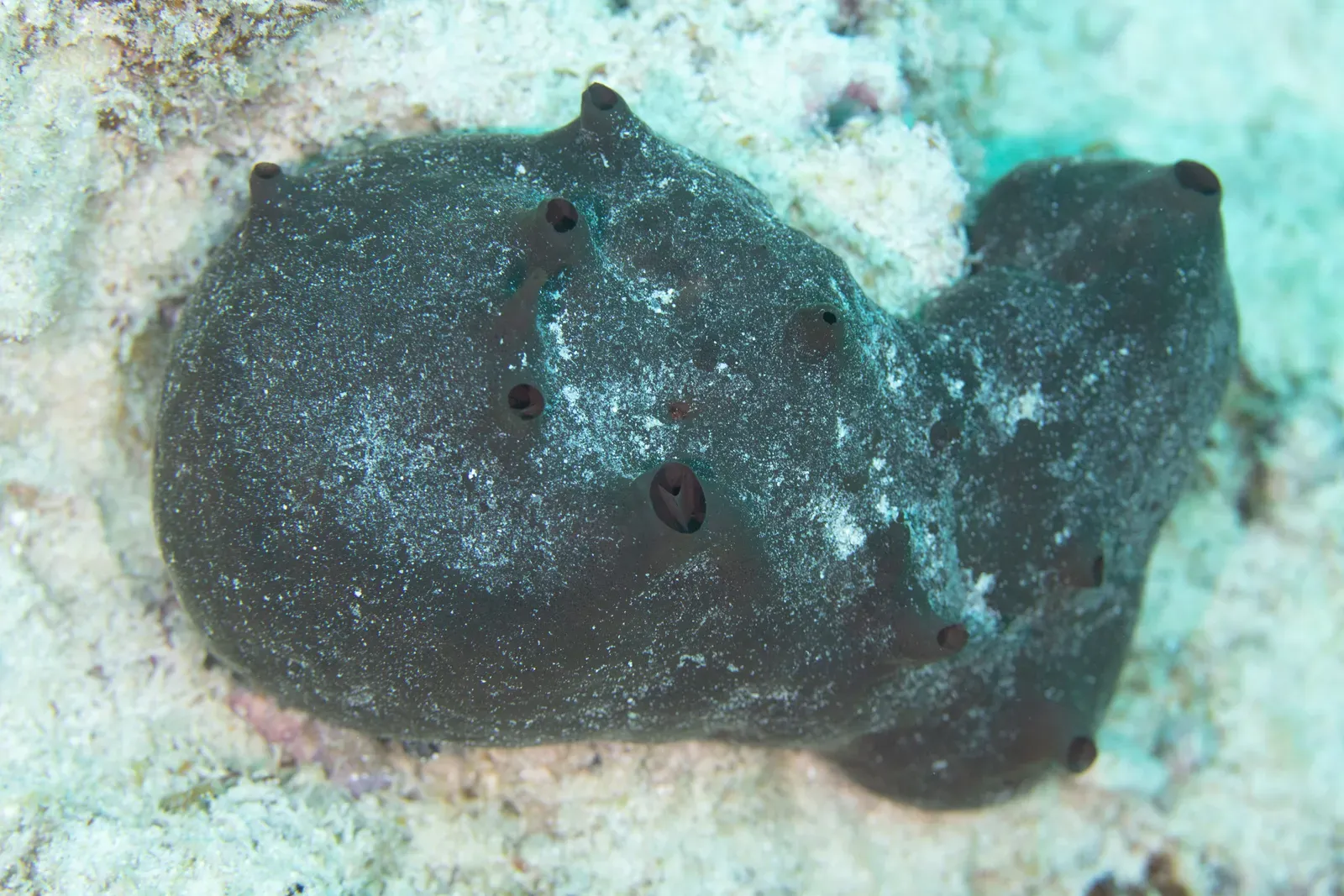
On a rocky seabed, a bath sponge does not chase, chew, or splash. It simply lets the sea come to it—and that is a brilliant way to be alive.
A lumpy surprise beneath the waves
Imagine lowering your mask into clear coastal water. A rocky ledge slides into view. There are shadowy crevices, swaying bits of sea life, and—wait—is that a soft, bumpy loaf of bread stuck to the rock? It is not bread. It is an animal: the bath sponge, or Spongia officinalis.
The surprising part comes next. This animal has no brain, no heart, no bones, and no face. Yet it is alive, feeding, growing, and responding to its watery home. A bath sponge can form an irregular rounded mass reaching about 35 centimetres across—roughly the width of a big school ruler, or a small cushion with an extremely lumpy personality.
Bath sponges belong to a group called Porifera, a name connected with pores. That fits beautifully: their bodies are full of tiny openings. They are not plants, rocks, or forgotten bath toys. They are animals with a very different plan for life from ours.
Evidence: IUCN Red List of Threatened Species: Spongia officinalis — Red List status; WoRMS — World Register of Marine Species: Spongia officinalis Linnaeus, 1759; Wikipedia: Spongia officinalis
Home is a rock—and moving is overrated
Adult bath sponges live attached to firm places on the seabed. In coastal waters of the Mediterranean Sea, and in nearby north-eastern Atlantic waters around the Strait of Gibraltar, they can be found on rocky ground, beneath overhangs, and in sea caves. A cave may sound like a dramatic address, but a sponge is not looking for treasure maps. It needs a suitable solid surface and flowing seawater.
Once settled, an adult sponge is sessile, meaning it stays in one place. No fins. No flippers. No late dash for the bus. Instead, currents bring the world to the sponge. Nearby individuals may grow in the same good patch of habitat, but that does not mean they are having sponge parties; no social groups are known.
This stillness is not laziness. It is a clever life strategy. Anchored to a rock, the sponge can spend its time doing the important work of moving seawater through its body. In the busy underwater neighbourhood, that filtering also helps cycle tiny bits of material between the water and the seabed community.
Evidence: WoRMS — World Register of Marine Species: Spongia officinalis Linnaeus, 1759; Wikipedia: Spongia officinalis; Frontiers in Marine Science: Gearing Up for Warmer Times: Transcriptomic Response of Spongia officinalis to Elevated Temperatures Reveals Recruited Mechanisms and Potential for Resilience
How do you eat without a mouth? Let the ocean deliver lunch
Here is the bath sponge’s superpower: filtering. It draws seawater through many small pores and body canals, catches food from the flow, and sends water back out through larger openings. There is no mouth like yours and no digestive tract like a fish’s. The whole body is part of the food-catching system.
What is on the menu? Plankton, bacteria, and other tiny suspended organic particles. Think of it as gathering the smallest crumbs drifting through a giant blue kitchen. The sponge does not hunt a meal or bite it. It patiently sorts useful specks from the passing water.
This can make a bath sponge seem almost like a living strainer, but it is much more remarkable than a kitchen tool. It is an animal carrying out all the work it needs to stay alive with a body built for water. Its quiet pumping is a reminder that an adventure does not always need racing, roaring, or sharp teeth.
Evidence: WoRMS — World Register of Marine Species: Spongia officinalis Linnaeus, 1759; Wikipedia: Spongia officinalis
Why is it called a bath sponge? Humans noticed its softness
The name gives away a long human connection. Soft natural sponges have been used for washing since ancient Greece, thousands of years ago. Later, their use spread through Europe. So when people say “bath sponge,” they are naming this sea animal after the way humans have used its flexible skeleton.
That history is interesting—but it can also help us ask a caring question: what is best for the animal still living on the seabed? A wild sponge is not an object waiting on a shelf. It is a filter-feeder doing its own important life work in a coastal habitat.
There is hopeful science here. Because sponge pieces can often grow into new sponges, people can cultivate sponge fragments in underwater farms. Carefully managed sponge culture may reduce pressure from collecting wild sponges. It is not a magic wand that proves every wild population is safe, but it can be one useful tool alongside protecting healthy sponge grounds.
Evidence: Wikipedia: Spongia officinalis; WoRMS — World Register of Marine Species: Spongia officinalis Linnaeus, 1759; Frontiers in Marine Science: Gearing Up for Warmer Times: Transcriptomic Response of Spongia officinalis to Elevated Temperatures Reveals Recruited Mechanisms and Potential for Resilience
A quiet animal needs loud-hearted care
Bath sponges have not been globally evaluated on the IUCN Red List. That phrase, “Not Evaluated,” is important: it does not mean everything is fine, and it does not mean disaster is certain. It means there is no formal global IUCN assessment to give us a full worldwide picture.
Scientists have reported serious local declines and mortality events linked with intensive or unregulated harvesting, disease outbreaks, and warmer seawater. Research on Spongia officinalis shows that elevated temperatures can trigger substantial stress responses. Warm seas are not just a background detail for an animal that lives immersed in water; they can change the conditions of its whole home.
The good news is that caring can be practical. Protecting sponge grounds, watching for disease and heat stress, and using controlled cultivation where appropriate can help local managers make wiser choices. We do not have to pretend we know every answer to care. Curiosity is part of care: Where are the sponge grounds? How are they doing? What will help them continue their slow, watery lives?
Evidence: IUCN Red List of Threatened Species: Spongia officinalis — Red List status; Wikipedia: Spongia officinalis; Frontiers in Marine Science: Gearing Up for Warmer Times: Transcriptomic Response of Spongia officinalis to Elevated Temperatures Reveals Recruited Mechanisms and Potential for Resilience
The world is full of ways to be an animal
A bath sponge will never wink at a camera, race a dolphin, or build a nest. Still, it is a wonderful neighbour in the sea. Its body makes a home from pores and pathways. Its meal arrives as a stream. Its ordinary-looking lumpiness hides an ancient animal design that has lasted for an astonishingly long time.
Next time you see holes in a rock, bubbles rising in a tide pool, or water slipping through a colander, remember the bath sponge. It shows that being alive can look wildly different from being human. No face is needed for a creature to matter. No voice is needed for it to deserve a safe home.
And perhaps that is the best underwater lesson: look closer before deciding something is dull. The quietest animal on the reefy rock may be busy doing something extraordinary, one tiny floating snack at a time.
Evidence: WoRMS — World Register of Marine Species: Spongia officinalis Linnaeus, 1759; Wikipedia: Spongia officinalis; IUCN Red List of Threatened Species: Spongia officinalis — Red List status
A gentle choice for sea friends—and for our shared home
When we notice that a sponge is a living animal with a home and a job in the sea, it can make us pause before treating animals as things. Choosing reusable non-animal washing tools is one simple way to leave wild bath sponges where they belong: filtering seawater on their rocky homes.
Food choices connect to the sea, too. The World Health Organization describes healthy eating patterns that include plenty of whole grains, vegetables, fruit, pulses, nuts, and seeds. With a trusted adult, families can enjoy trying plant-powered meals—perhaps bean tacos, lentil soup, or a colourful veggie-and-grain bowl—without needing every meal to be perfect.
The IPCC reports that shifts toward sustainable, healthy, more plant-based diets can reduce food-system emissions and pressure on land and biodiversity. A small, kind choice on a plate can be part of a much bigger promise: making room for animals, from busy birds to the very quiet bath sponge.
Evidence: World Health Organization: Healthy diet; Intergovernmental Panel on Climate Change: Climate Change 2022: Mitigation of Climate Change — Chapter 7; Wikipedia: Spongia officinalis
Questions people ask
Is a bath sponge really an animal?
Yes. Spongia officinalis is a demosponge in the animal phylum Porifera. It has an unusually simple body plan, but it is alive and feeds by filtering seawater.
Evidence: WoRMS — World Register of Marine Species: Spongia officinalis Linnaeus, 1759; Wikipedia: Spongia officinalis
Does it have a mouth?
No mouth like ours. Water moves through small pores and canals in its body, and the sponge captures tiny food particles from that flow.
Evidence: WoRMS — World Register of Marine Species: Spongia officinalis Linnaeus, 1759; Wikipedia: Spongia officinalis
Can a bath sponge walk to a new rock?
Adult bath sponges are sessile: they remain attached to a firm surface. Their solution is to let seawater currents bring food past them.
Evidence: WoRMS — World Register of Marine Species: Spongia officinalis Linnaeus, 1759; Wikipedia: Spongia officinalis
Are bath sponges safe from danger?
There is no global IUCN assessment for this species, so its worldwide status is not known. But studies and reports describe local stress and mortality linked with harvesting, disease, and warmer seawater.
Evidence: IUCN Red List of Threatened Species: Spongia officinalis — Red List status; Wikipedia: Spongia officinalis; Frontiers in Marine Science: Gearing Up for Warmer Times: Transcriptomic Response of Spongia officinalis to Elevated Temperatures Reveals Recruited Mechanisms and Potential for Resilience
Read the evidence
Sources behind this story
- Spongia officinalis — Red List status — IUCN Red List of Threatened Species
- Spongia officinalis Linnaeus, 1759 — WoRMS — World Register of Marine Species
- Spongia officinalis — Wikipedia
- Gearing Up for Warmer Times: Transcriptomic Response of Spongia officinalis to Elevated Temperatures Reveals Recruited Mechanisms and Potential for Resilience — Frontiers in Marine Science
- Healthy diet — World Health Organization
- Climate Change 2022: Mitigation of Climate Change — Chapter 7 — Intergovernmental Panel on Climate Change
Health information is general education, not personal medical advice. Young readers should make food choices with a trusted adult and qualified health professional.