Today's animal friend · 17 October 2026
The Night-Time Ball Python Who Becomes a Living Doughnut
At dusk, when the sky fades to purple, a ball python may slide from a borrowed burrow to begin its careful night-time hunt.
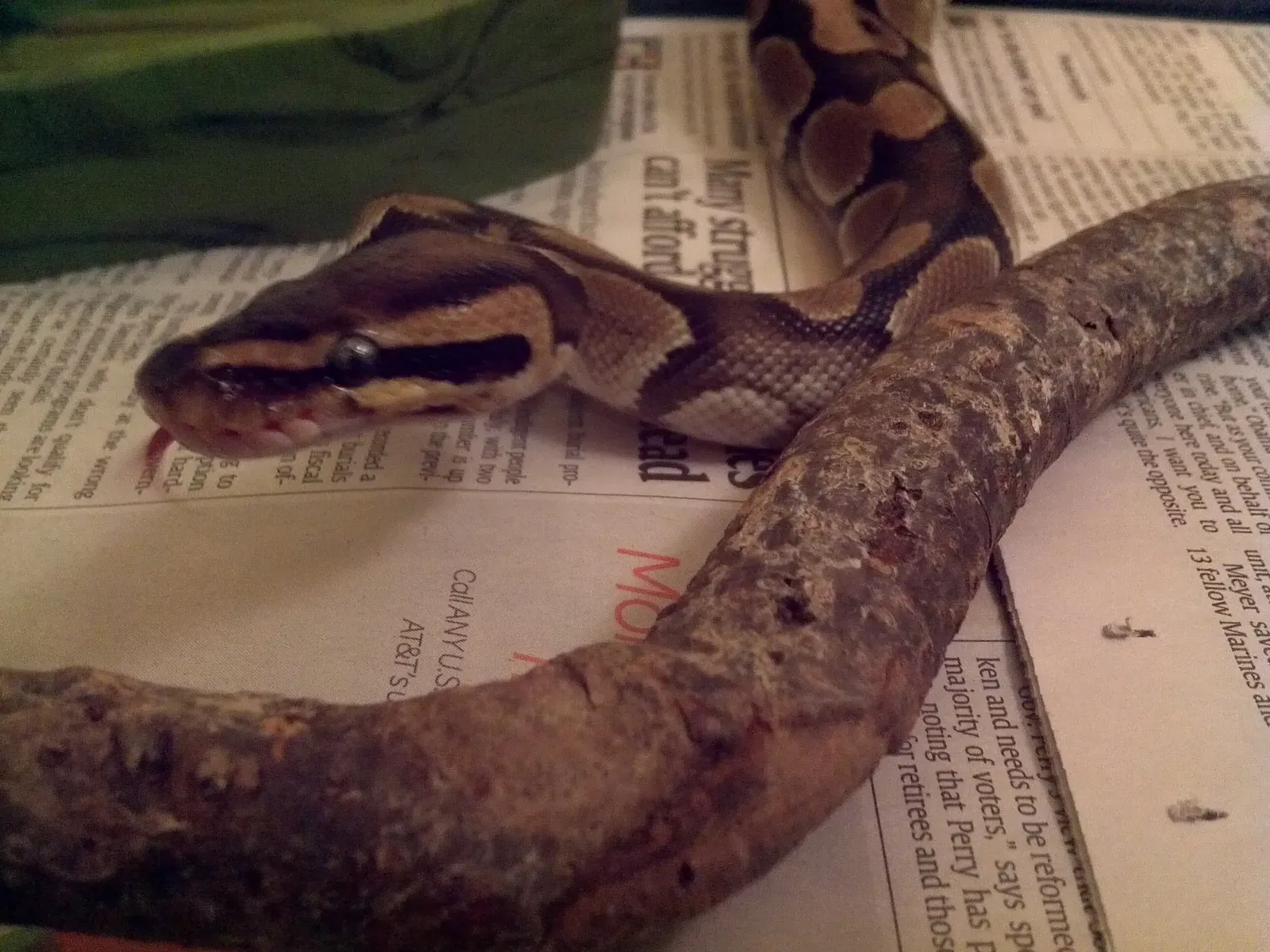
At dusk, when the sky fades to purple, a ball python may slide from a borrowed burrow to begin its careful night-time hunt.
A rustle in the grass—and then a perfect ball
Imagine walking through warm grassland as daylight softens into dusk. The air is cooler now. Somewhere near the ground, dry leaves make a tiny shhh-shhh sound. A ball python is on the move.
But if this snake feels frightened, it has an astonishing disappearing act. Instead of stretching tall or making a big fuss, it coils itself into a snug, tidy ball and tucks its head safely in the middle. It can look a little like a patterned cinnamon roll with a secret in the centre. This defensive habit gave the ball python its name.
Its other name is the royal python, and its scientific name is Python regius. It is a nonvenomous python, so it does not use venom to hunt. “Royal” is quite a grand name for an animal whose cleverest safety plan is: become a small, quiet circle. Yet that calm, careful strategy is part of what makes this snake so memorable.
Evidence: IUCN Red List of Threatened Species: Python regius (Ball Python) — Red List Assessment; Animal Diversity Web, University of Michigan Museum of Zoology: Python regius (Ball Python, Royal Python); Wikipedia: Ball python
Where does this secretive snake spend its day?
Ball pythons are native to West and Central Africa. They live among savanna grasslands and open forests or woodlands, landscapes that can feel wide and sunny by day and full of hidden corners by night.
A burrow is one of those useful hidden corners. Ball pythons spend much of their time on or below the ground, using burrows as retreat places. Think of a burrow as a ready-made room beneath the busy world: somewhere cooler, darker, and sheltered while the hottest part of the day passes overhead. A ball python may use a burrow made by another animal; it is wise not to assume it dug every home itself.
That tucked-away life means this snake can be hard to spot. Its chunky body and brown pattern help it blend with the earthy colours around it. You might be looking straight at one and only notice when the “fallen branch” glides away. Outdoors is full of excellent disguises.
Evidence: Animal Diversity Web, University of Michigan Museum of Zoology: Python regius (Ball Python, Royal Python); Wikipedia: Ball python
Why wait for twilight?
When dawn, dusk, or night arrives, ball pythons become most active. This is when they set out to find food, moving low and quietly through their habitat. No torch, no backpack, no noisy snack wrapper—just a snake following the night-time world.
Ball pythons are carnivores. They wait in ambush for terrestrial vertebrates, especially rodents and other small mammals; birds are also on the menu. Waiting patiently is important. Rather than racing after every possible meal, a python can stay still and strike when prey comes close.
Then comes the famous python squeeze. A ball python coils around its prey and constricts it. It is not a “hug” in the friendly human sense, even though the coils look rather like one. It is a hunting method, and it is different from venom. In the wider food web, a snake that eats rodents and other small animals is one thread in a busy web of lives.
A grown ball python is commonly around one to one and a half metres long, though some wild reports reach about 1.83 metres. That is a lot of snake, but still small enough to make its neat defensive ball seem extra surprising.
Evidence: Animal Diversity Web, University of Michigan Museum of Zoology: Python regius (Ball Python, Royal Python); Wikipedia: Ball python
A mum with an important curl-around job
Ball pythons are generally solitary. They do not travel around in a snake club or hold moonlit meetings in the grass. Most of the time, each one goes about its own business.
There is one special family moment, though. A female remains coiled around her eggs before they hatch. The eggs are leathery, and her curled body stays close through that waiting time. It is a lovely reminder that “solitary” does not mean “uncaring.” Animals can have very different ways of protecting the next generation.
Ball pythons may live for 15 to 30 years with care. That long life makes each wild snake more than a quick glimpse in the grass. It is an animal with many seasons ahead: many dusks, many quiet burrows, and many chances to play its part in its home.
Evidence: Animal Diversity Web, University of Michigan Museum of Zoology: Python regius (Ball Python, Royal Python); Wikipedia: Ball python
What makes a wild home hard to replace?
Ball pythons are listed as Near Threatened on the IUCN Red List assessment recorded for 2021, with a decreasing population reported. That is a serious flag: it means their future needs attention before the situation becomes worse.
Several pressures are reported, including collection for the international pet trade, hunting for meat or skins, and habitat loss. A grassland or open woodland is not just a patch of space on a map. It is hiding cover, hunting ground, burrows, prey, and routes through the landscape. Take away too many pieces, and a snake’s everyday life becomes much harder.
Here is a hopeful question: what can people do? Keeping wild habitats standing matters. So does reducing unsustainable wild collection and supporting legal, traceable trade. If someone’s family is thinking about any animal companion, asking where that animal came from and whether its needs can truly be met is a caring place to begin. Wild animals deserve safe, thriving homes in the wild—not just admiration from afar.
Evidence: IUCN Red List of Threatened Species: Python regius (Ball Python) — Red List Assessment; Animal Diversity Web, University of Michigan Museum of Zoology: Python regius (Ball Python, Royal Python); Wikipedia: Ball python
Try the ‘look closer’ challenge
Next time you are outdoors, pause at the edge of a garden, park, or field. What small lives might be using the spaces under leaves, roots, stones, or long grass? You may not find a ball python—these snakes live in Africa—but you can practise their most important superpower: noticing without disturbing.
Keep a respectful distance from any wild animal. Let it choose where to go. A creature does not need to be cuddly, fluffy, or even easy to spot to deserve kindness. A ball python’s quiet life offers a brilliant lesson: being gentle is not the same as being unimportant.
So picture that dusk-time snake again, slipping from its shelter with scales whispering over the ground. It may be shy, but it belongs to a world of grass, burrows, birds, mammals, and moonlight. Protecting that world means making room for one extraordinary living doughnut at a time.
Evidence: IUCN Red List of Threatened Species: Python regius (Ball Python) — Red List Assessment; Animal Diversity Web, University of Michigan Museum of Zoology: Python regius (Ball Python, Royal Python); Wikipedia: Ball python
A kind choice can begin on your plate
Caring about a ball python can lead to a bigger thought: every animal is somebody, not something. This snake needs rodents and birds as part of its natural life, and its wild food web belongs to its habitat. We can still choose kindness in our own meals by enjoying more plant foods and leaving more room in our hearts for animals.
The World Health Organization describes healthy diets as varied and rich in foods such as whole grains, vegetables, fruit, pulses, nuts, and seeds. With a trusted adult and, when needed, a qualified health professional, families can explore tasty plant-forward meals: bean tacos, lentil soup, crunchy veggie wraps, or fruit with nut butter.
Plant-based eating can be a hopeful planet choice, too. The IPCC reports that shifts toward sustainable, healthy, more plant-based diets can reduce food-system emissions and pressure on land and biodiversity. No guilt required—just curiosity, compassion, and perhaps one delicious new plant-powered recipe.
Evidence: World Health Organization: Healthy diet; Intergovernmental Panel on Climate Change: Climate Change 2022: Mitigation of Climate Change — Chapter 7
Questions people ask
Do ball pythons have venom?
No. Ball pythons are nonvenomous. They hunt by coiling around prey and constricting it.
Evidence: Animal Diversity Web, University of Michigan Museum of Zoology: Python regius (Ball Python, Royal Python); Wikipedia: Ball python
Why is it called a ball python?
When threatened, it may coil tightly into a ball and keep its head protected in the middle.
Evidence: Animal Diversity Web, University of Michigan Museum of Zoology: Python regius (Ball Python, Royal Python); Wikipedia: Ball python
Are ball pythons awake in daytime?
They are most active around dawn, dusk, and night, and often rest in sheltered places during the day.
Evidence: Animal Diversity Web, University of Michigan Museum of Zoology: Python regius (Ball Python, Royal Python); Wikipedia: Ball python
How can children help animals such as ball pythons?
Learn to appreciate wild animals without disturbing them, care about protecting habitats, and ask thoughtful questions about where animal companions come from.
Evidence: IUCN Red List of Threatened Species: Python regius (Ball Python) — Red List Assessment; Animal Diversity Web, University of Michigan Museum of Zoology: Python regius (Ball Python, Royal Python); Wikipedia: Ball python
Read the evidence
Sources behind this story
- Python regius (Ball Python) — Red List Assessment — IUCN Red List of Threatened Species
- Python regius (Ball Python, Royal Python) — Animal Diversity Web, University of Michigan Museum of Zoology
- Ball python — Wikipedia
- Healthy diet — World Health Organization
- Climate Change 2022: Mitigation of Climate Change — Chapter 7 — Intergovernmental Panel on Climate Change
Health information is general education, not personal medical advice. Young readers should make food choices with a trusted adult and qualified health professional.