Today's animal friend · 11 September 2026
The White-Headed River Watcher
Follow the flash of a white head above a lake, discover a nest that can become enormous, and learn small, hopeful ways people can help eagles and the watery places they call home.
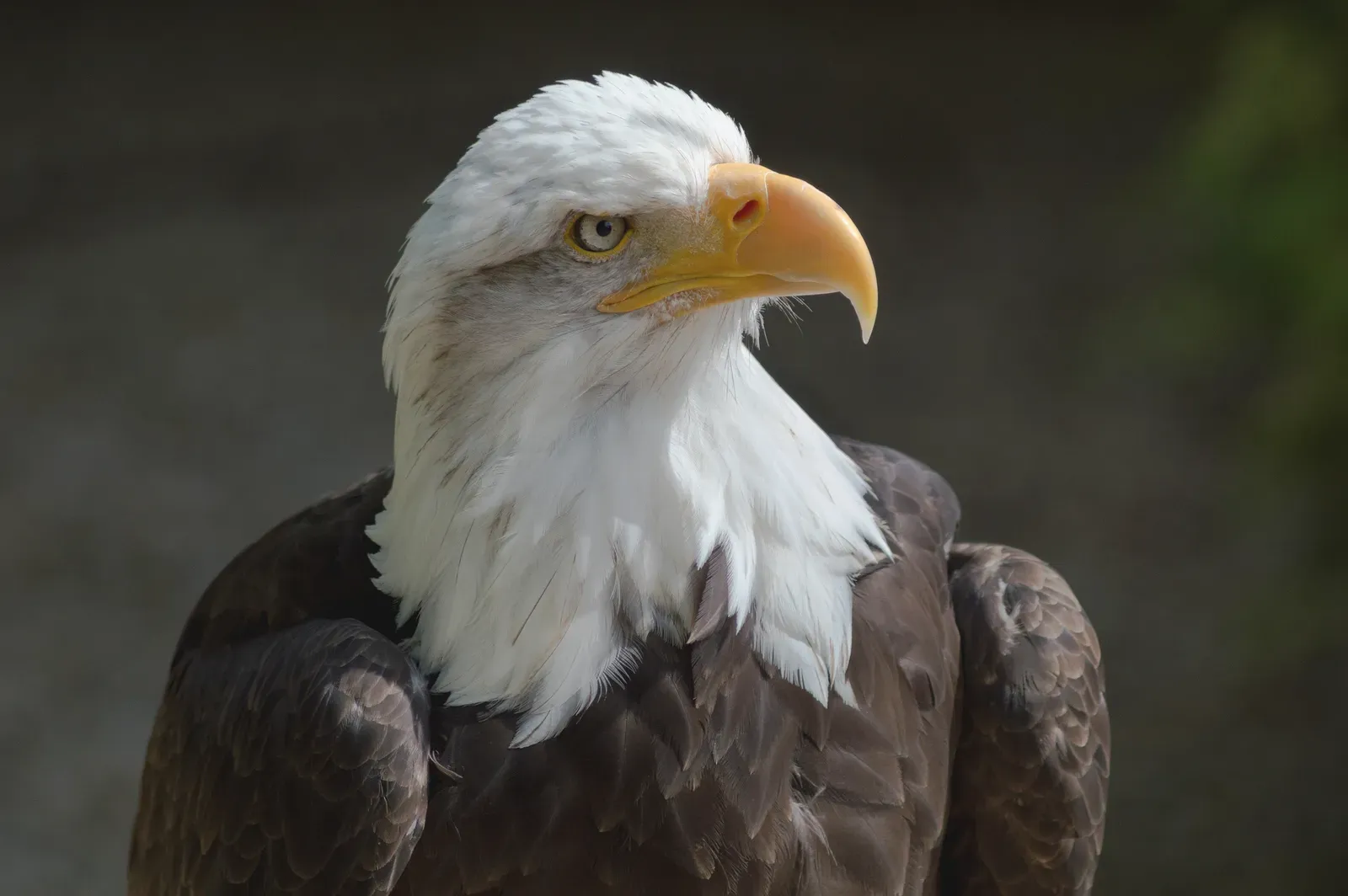
Follow the flash of a white head above a lake, discover a nest that can become enormous, and learn small, hopeful ways people can help eagles and the watery places they call home.
A white head flashes over the water
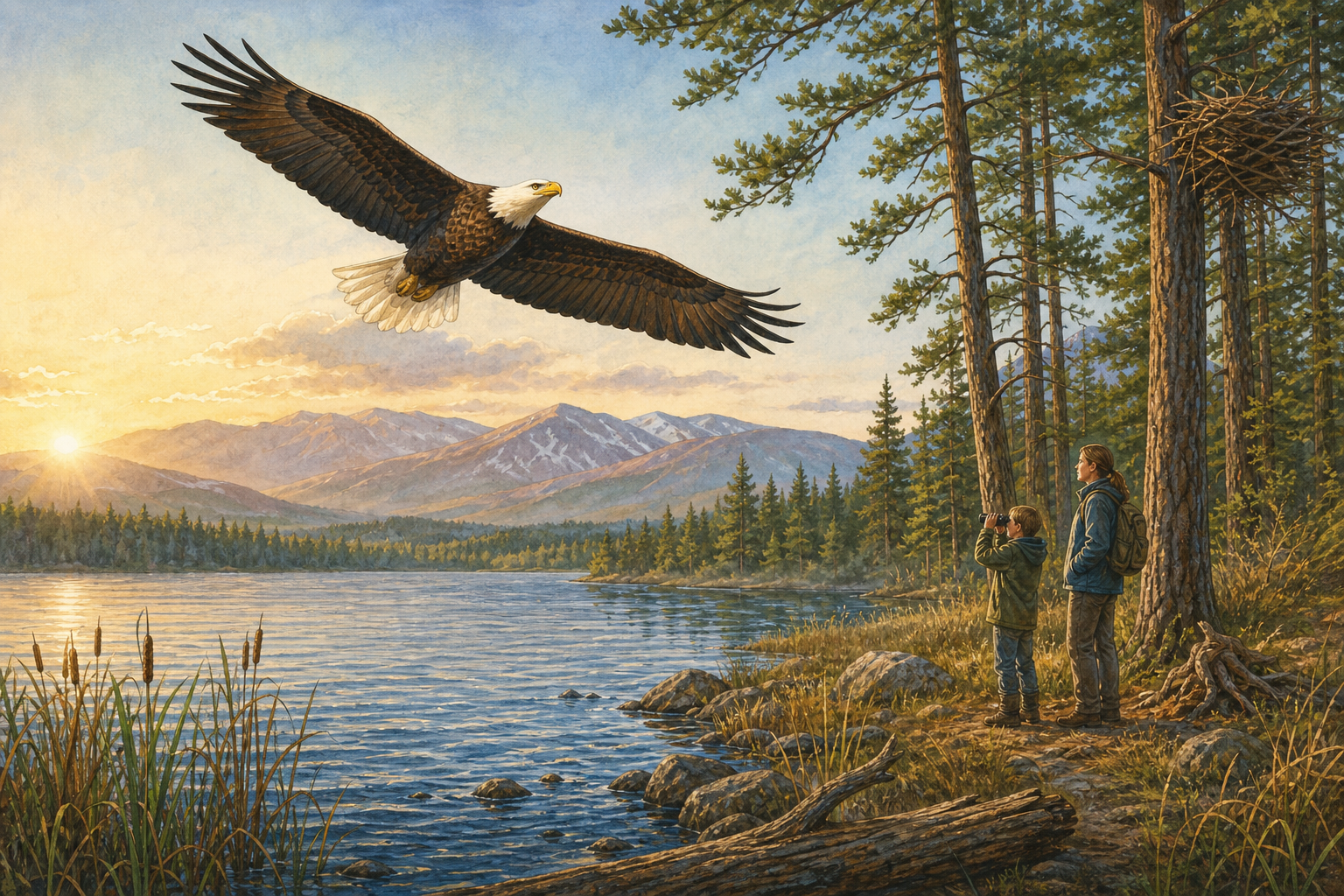
Imagine you are beside a lake on a breezy morning. The water wrinkles like crumpled blue paper. Then a huge bird glides overhead, hardly seeming to flap at all. Its dark brown body, bright yellow hooked beak, and snowy white head stand out against the sky. Meet the bald eagle, also called the American bald eagle: Haliaeetus leucocephalus.
Here is the first splendidly silly surprise: bald eagles are not bald. Their heads are covered with white feathers. Long ago, “bald” could mean “white-headed,” which is a much better description. Adult birds wear that famous white head and tail like a very fancy outdoor outfit.
A bald eagle can stretch more than two metres from wingtip to wingtip. That is wider than many doorways are tall. Adults are roughly 70 to 102 centimetres long and weigh about 3 to 6.3 kilograms. Females average larger than males, although size varies from bird to bird. When one passes overhead, it can make the whole sky feel a little more exciting.
Evidence: IUCN Red List of Threatened Species: Haliaeetus leucocephalus (Bald Eagle) — Red List Assessment; Cornell Lab of Ornithology — All About Birds: Bald Eagle Life History; Wikipedia: Bald eagle
Why does this eagle keep choosing watery neighbourhoods?
Because water is where much of its food can be found. Bald eagles live across much of North America, from Alaska and Canada through the contiguous United States and into northern Mexico. Look near coasts, rivers, lakes, and wetlands, especially where there are secure places to roost or nest, such as large trees or cliffs.
They are day-time hunters and watchers. An eagle may sit on a perch, scan the water while flying, and search for a chance at a meal. Fish are especially important, but bald eagles also eat waterbirds and small mammals. They will scavenge carrion, too: finding food already available rather than hunting every bite. Sometimes they even take food from another bird. Not polite at a picnic, perhaps, but wild animals must use opportunities they find.
Some northern birds move when water freezes and food becomes harder to reach. In warmer places, some may stay put. Either way, an eagle’s life is tied to the changing seasons of water, weather, and food.
Evidence: IUCN Red List of Threatened Species: Haliaeetus leucocephalus (Bald Eagle) — Red List Assessment; Cornell Lab of Ornithology — All About Birds: Bald Eagle Life History; Wikipedia: Bald eagle
The stick house that keeps growing
If you think your bedroom gets cluttered, wait until you hear about a bald eagle nest. A breeding pair often returns to the same nest and adds more sticks year after year. The result can become the largest tree nest made by any bird in North America. Some nests grow so deep that they can be as deep as a small car is long.
That is not a tiny cup-shaped nest tucked into a hedge. It is more like a giant, high-up pile of branches—carefully placed in a secure nesting spot. Reusing and enlarging a nest makes sense when it remains safe and useful. Bald eagles commonly form long-term pairs, though nature does not hand out guarantees to every pair or every nest.
Young bald eagles do not begin life with the famous white-headed look. Their feathers change over several years. So if you spot a large eagle that looks mostly brown, it may be a young bald eagle rather than a different kind of eagle. Nature enjoys a slow costume change.
Evidence: Cornell Lab of Ornithology — All About Birds: Bald Eagle Life History; Wikipedia: Bald eagle; IUCN Red List of Threatened Species: Haliaeetus leucocephalus (Bald Eagle) — Red List Assessment
A bird with two jobs in the food web
Bald eagles are predators, meaning they catch some animals for food. They are also scavengers, meaning they eat animals that have already died. Those are two different ways of finding a meal, and both link an eagle to the busy food web around rivers, lakes, and coasts.
Think of a food web as a giant, invisible map of who depends on whom. A healthy-looking lake is not just water. It includes fish, birds, plants, insects, shorelines, and the animals that visit. An eagle soaring above is one striking part of that living neighbourhood.
People notice bald eagles because they are the national bird of the United States and appear on the country’s seal. But even without that famous role, they would be worth noticing: a powerful wild neighbour whose daily life depends on clean places to feed, rest, and raise young.
Evidence: Cornell Lab of Ornithology — All About Birds: Bald Eagle Life History; Wikipedia: Bald eagle; IUCN Red List of Threatened Species: Haliaeetus leucocephalus (Bald Eagle) — Red List Assessment
A comeback story—with more chapters to write
There is good news. The bald eagle is listed globally as Least Concern by the IUCN, and numbers have increased in well-monitored parts of its range. In 2021, more than 316,000 bald eagles were estimated in the contiguous United States. That number does not count every eagle across North America, but it is an encouraging sign.
Their recovery followed important changes, including restrictions on DDT, legal protection, and habitat safeguards. DDT was a harmful pesticide that made it difficult for eagles to reproduce successfully. People acted, and eagles had a chance to recover. That is a real-world reminder that caring choices can matter.
The story is not finished. Lead poisoning, loss or disturbance of nesting habitat, collisions, electrocution, and other contaminants can still harm eagles. Protecting nest areas, looking after habitat, monitoring populations, and reducing preventable poisoning are all part of keeping this comeback going.
If you are lucky enough to see an eagle, give it plenty of space. Watch quietly with an adult from a respectful distance. A wonderful wildlife sighting should leave the animal free to keep doing its eagle business—watching, flying, resting, or perhaps judging a fish from very high up.
Evidence: IUCN Red List of Threatened Species: Haliaeetus leucocephalus (Bald Eagle) — Red List Assessment; Cornell Lab of Ornithology — All About Birds: Bald Eagle Life History; Wikipedia: Bald eagle
Try an eagle-sized question on your next walk
Near water, pause and ask: where might a big bird find food here? Which trees look strong enough to hold a nest? What would change if the water froze, became polluted, or lost its shoreline plants? You do not need to find an eagle to become a careful observer. Looking closely is the beginning of caring.
You can also make a small “water neighbours” sketchbook page. Draw the lake, river, marsh, or coast you visit. Add only animals and plants you really see, or label questions you still have. A question mark is an excellent piece of wildlife art.
Bald eagles remind us that even an animal with giant wings needs ordinary things: food, safe places, and room to live. Protecting those things helps many creatures, not just the bird with the white-feathered head.
Evidence: Cornell Lab of Ornithology — All About Birds: Bald Eagle Life History; IUCN Red List of Threatened Species: Haliaeetus leucocephalus (Bald Eagle) — Red List Assessment; Wikipedia: Bald eagle
A gentle choice for eagles, waterways, and us
It is easy to cheer for an eagle catching a fish, yet it is also worth remembering that every animal in a food web is living its own life. Caring about eagles can grow into caring about fish, waterbirds, wetlands, and the places that support them all.
At home, one positive way to show that care is to enjoy more plant-based meals and snacks with your family—perhaps beans, lentils, vegetables, fruit, whole grains, nuts, or seeds. The World Health Organization includes these foods in varied healthy diets, while reminding us that food needs are personal. A trusted adult and qualified health professional can help with individual questions.
Choosing more plant-based foods can also be a planet-friendly step. The IPCC reports that shifts toward sustainable, healthy, more plant-based diets can reduce food-system emissions and pressure on land and biodiversity. No one has to be perfect. A curious new plant-based dish can be one small vote for kinder, healthier shared habitats.
Evidence: World Health Organization: Healthy diet; Intergovernmental Panel on Climate Change: Climate Change 2022: Mitigation of Climate Change — Chapter 7
Questions people ask
Do bald eagles only eat fish?
No. Fish are especially important, but bald eagles also eat waterbirds, small mammals, and carrion. They may scavenge or take food from other birds when an opportunity appears.
Evidence: Cornell Lab of Ornithology — All About Birds: Bald Eagle Life History; Wikipedia: Bald eagle; IUCN Red List of Threatened Species: Haliaeetus leucocephalus (Bald Eagle) — Red List Assessment
Why might a bald eagle look brown instead of white-headed?
Young bald eagles do not yet have the adult white head and tail. Their plumage changes over several years, so a mostly brown large eagle may be a youngster.
Evidence: Cornell Lab of Ornithology — All About Birds: Bald Eagle Life History; Wikipedia: Bald eagle
Are bald eagles safe now?
They have made a remarkable recovery and are globally listed as Least Concern, but they still face dangers including lead poisoning and loss or disturbance of nesting habitat. Recovery means hope, not that caring can stop.
Evidence: IUCN Red List of Threatened Species: Haliaeetus leucocephalus (Bald Eagle) — Red List Assessment; Cornell Lab of Ornithology — All About Birds: Bald Eagle Life History
What is the kindest way to watch one?
Observe quietly from a respectful distance with an adult, and never approach a nest or try to make an eagle move. Wild animals need space to feed, rest, and care for their young.
Evidence: Cornell Lab of Ornithology — All About Birds: Bald Eagle Life History; IUCN Red List of Threatened Species: Haliaeetus leucocephalus (Bald Eagle) — Red List Assessment
Read the evidence
Sources behind this story
- Haliaeetus leucocephalus (Bald Eagle) — Red List Assessment — IUCN Red List of Threatened Species
- Bald Eagle Life History — Cornell Lab of Ornithology — All About Birds
- Bald eagle — Wikipedia
- Healthy diet — World Health Organization
- Climate Change 2022: Mitigation of Climate Change — Chapter 7 — Intergovernmental Panel on Climate Change
Health information is general education, not personal medical advice. Young readers should make food choices with a trusted adult and qualified health professional.