Today's animal friend · 15 November 2026
Atlantic Puffin: The Seabird That Flies Underwater
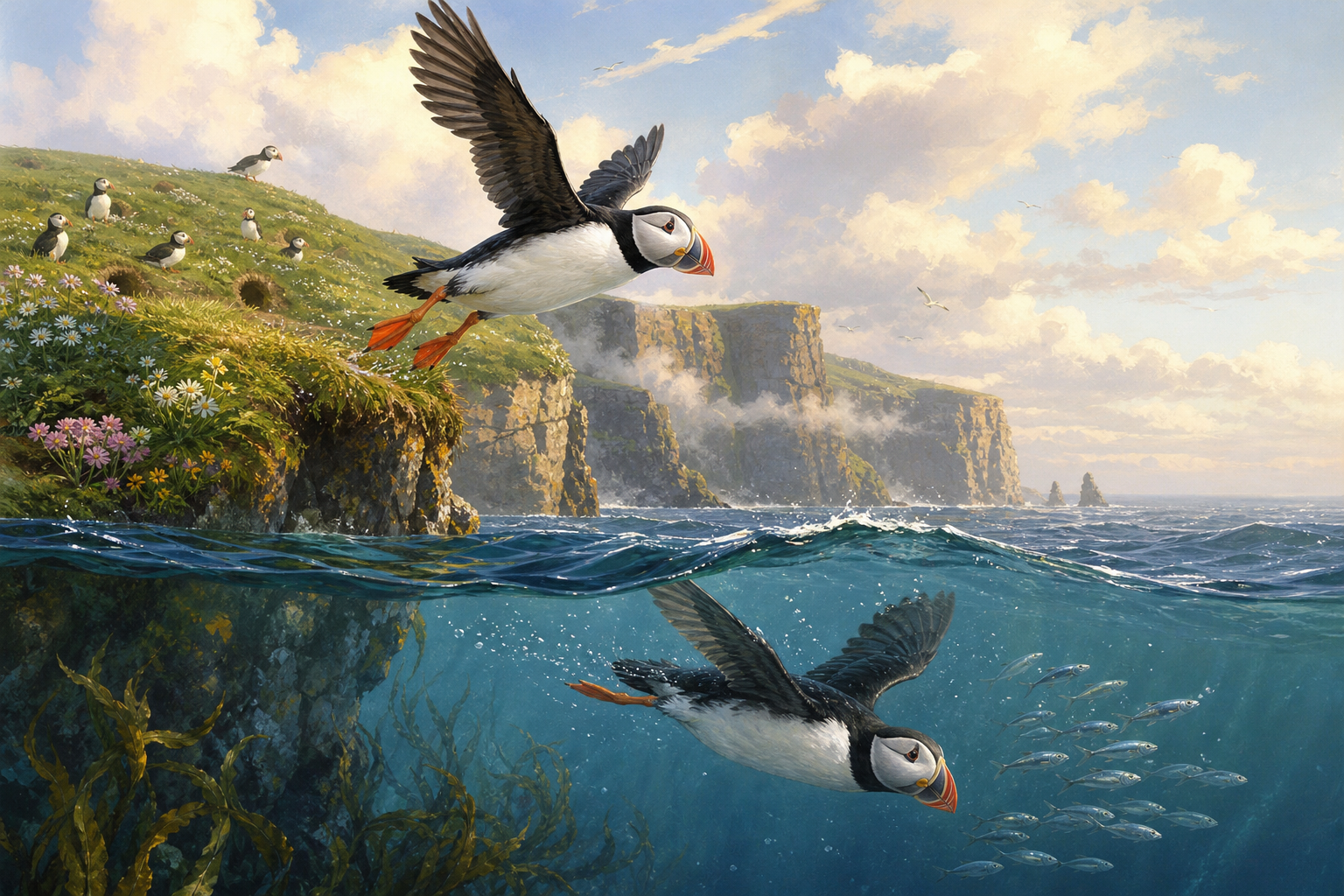
A splash, a whirr of wings, and—whoosh!—a puffin becomes an underwater flyer. Let’s follow this remarkable little seabird from the open ocean to its bustling summer colony.
A splash, a whirr of wings, and—whoosh!—a puffin becomes an underwater flyer. Let’s follow this remarkable little seabird from the open ocean to its bustling summer colony.
A tiny bird vanishes beneath a giant wave
Picture a chilly Atlantic morning. The sea is wrinkled by wind, and a small black-and-white bird bobs on top like a floating toy. Then the Atlantic puffin tips forward, disappears beneath the foam, and starts to fly underwater.
That is not a joke from a very soggy bird comedy show. Puffins use their wings to power through the water and their feet to steer. They chase small fish below the surface, sometimes diving as deep as a tall building is high. On land, an adult Atlantic puffin is roughly the size of a crow. Underwater, though, it is a speedy little hunter in a smart black-and-white suit.
Its scientific name is Fratercula arctica, and it belongs to the auk family. Atlantic puffins live around the colder North Atlantic, from northeastern North America and Greenland to Iceland and northern Europe. Most of the year, they are out on the open ocean, where a person might never spot them at all.
Evidence: Cornell Lab of Ornithology (All About Birds): Atlantic Puffin — Life History; National Audubon Society: Atlantic Puffin — Field Guide; Wikipedia: Atlantic puffin; IUCN Red List of Threatened Species: Fratercula arctica (Atlantic Puffin) — Red List Assessment
Why does it wear such a spectacular bill?
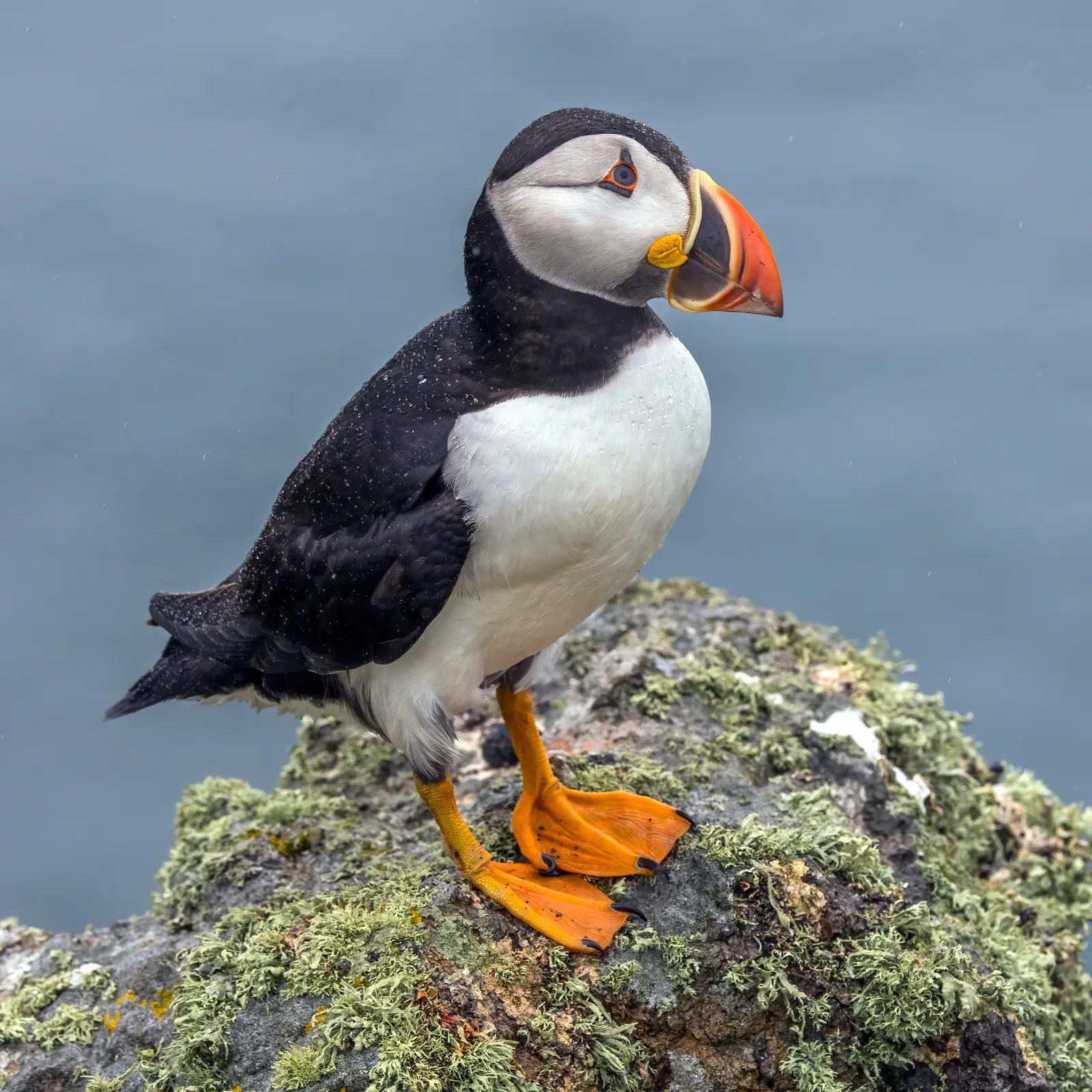
In the summer breeding season, an Atlantic puffin’s bill shines orange, red, and yellow. Add bright orange webbed feet and tidy dark-and-light feathers, and you have a bird dressed for a cliff-top party. No wonder puffins are sometimes called charming: they look as if they are permanently carrying a colourful crayon box on their faces.
But the bright look is seasonal. In winter, the outer parts of the bill fall away, leaving it smaller and duller. Same puffin, different outfit. It is a useful reminder that wild animals can change with the seasons in ways we might miss if we only see one photograph.
Puffins are active by day. When the breeding season arrives, they gather in colonies on coastal islands and sea cliffs. Imagine a neighbourhood where the homes are burrows in turf or soil, or sheltered crevices in rock—and where the neighbours can fly. Pairs may return to the same nesting area, and both parents care for their chick.
Evidence: National Audubon Society: Atlantic Puffin — Field Guide; Cornell Lab of Ornithology (All About Birds): Atlantic Puffin — Life History; Wikipedia: Atlantic puffin
What’s for dinner? A silver, wriggly snack
A puffin is a carnivore, which means it eats other animals. Its usual menu includes small schooling fish such as sand lance, herring, and capelin. What it finds can change with the season, the place, and which fish are available nearby. A puffin colony is not ordering from one identical restaurant menu.
When parents are feeding a chick, they carry fish back to the nest in their bills. It is an astonishing sight: one compact bird arriving with a neat bundle of little fish. The puffin’s life depends on a healthy sea that can provide these small fish, and the fish themselves are part of a much bigger ocean food web.
Puffins do not spend their whole lives on dramatic cliffs. Far from it. Outside the breeding season, they spend long stretches at sea. The cliffs are their summer nursery; the ocean is their wide, windy world.
Evidence: National Audubon Society: Atlantic Puffin — Field Guide; Cornell Lab of Ornithology (All About Birds): Atlantic Puffin — Life History; Wikipedia: Atlantic puffin
Welcome to the puffin capital of the world
If Atlantic puffins held a world meeting, Iceland would be a very busy place. Around six out of every ten Atlantic puffins live there, more than anywhere else. Across their range, the birds breed on North Atlantic coasts and islands, then disperse over the sea when the breeding season is over.
A colony can be full of movement: birds arriving, leaving, standing near burrows, and meeting one another. Puffins have even been observed rattling their bills together during courtship. It may look a little like two friends politely tapping colourful lunchboxes together.
Their nesting places need care. Burrows and crevices offer shelter, while surrounding ocean feeding areas provide the fish that adults and chicks need. A puffin’s story is never only about one cliff or one wave. It connects land and sea.
Evidence: Wikipedia: Atlantic puffin; Cornell Lab of Ornithology (All About Birds): Atlantic Puffin — Life History; Agreement on the Conservation of African-Eurasian Migratory Waterbirds: Guidance on the Conservation of the Atlantic Puffin
Wonderful—and needing our help
There are still millions of Atlantic puffins, yet the species is globally listed as Vulnerable, with a decreasing population trend in the registered 2018 assessment. This is one of those important nature facts that can sound puzzling at first: a species can have many members and still be in trouble if its numbers are falling quickly enough.
Puffins face different problems in different places. Changes in climate can affect weather and the small fish they hunt. Fish supplies can be depleted. Rats and cats introduced to nesting islands can threaten birds at colonies. Pollution, disturbance, fishing-gear bycatch, and poorly placed marine infrastructure can also cause harm. It is not one single villain in a cape; it is a tangle of pressures that can vary from colony to colony.
There is hopeful work to do. Conservation guidance highlights protecting breeding islands and offshore feeding places, managing forage fish sustainably, controlling introduced predators, reducing pollution, monitoring birds and bycatch, and choosing marine infrastructure sites carefully. These actions are ways of giving puffins a fairer chance—not a magic wand, but real care based on watching, learning, and acting.
Evidence: IUCN Red List of Threatened Species: Fratercula arctica (Atlantic Puffin) — Red List Assessment; Agreement on the Conservation of African-Eurasian Migratory Waterbirds: Guidance on the Conservation of the Atlantic Puffin; National Audubon Society: Atlantic Puffin — Field Guide
A wave-sized reason to care
It is easy to admire a puffin because of its bright bill and comical walk. But the deeper reason to care is simpler: each puffin is a living neighbour of the Atlantic, making long sea journeys, finding food, returning to a nest, and raising a chick in a world shared with us.
You can be part of the kindness story without going anywhere near a sea cliff. Learn about coastal wildlife, keep beaches and waterways free of litter, and encourage grown-ups to respect nesting areas and wildlife rules. When you see seafood on a menu, you can also ask curious questions about where food comes from and how the ocean is cared for.
Small everyday choices matter beyond the shore too. Sharing delicious meals built around beans, lentils, vegetables, fruit, grains, nuts, and seeds can be a caring, plant-forward way to enjoy food. Healthy diets can include a variety of these plant foods, and shifts toward sustainable, more plant-based eating can reduce pressure from food systems on the climate, land, and biodiversity. No guilt, no perfection contest—just another chance to choose kindness for animals and their homes, with a trusted adult’s help.
Evidence: Agreement on the Conservation of African-Eurasian Migratory Waterbirds: Guidance on the Conservation of the Atlantic Puffin; World Health Organization: Healthy diet; Intergovernmental Panel on Climate Change: Climate Change 2022: Mitigation of Climate Change — Chapter 7
One gentle choice that reaches the ocean
Puffins catch fish because that is how puffins live. We humans have many more choices. Trying a colourful plant-based meal now and then—perhaps a bean stew, veggie wrap, lentil pasta sauce, or fruit-and-oat snack—can be a friendly way to think about animals and the planet.
The World Health Organization highlights varied diets with foods such as vegetables, fruit, whole grains, pulses, nuts, and seeds. The IPCC reports that shifts toward sustainable, healthy, more plant-based diets can help lower food-system emissions and reduce pressure on land and biodiversity. If you want to make food changes, chat with a parent, carer, or qualified health professional; growing bodies deserve thoughtful care.
Evidence: World Health Organization: Healthy diet; Intergovernmental Panel on Climate Change: Climate Change 2022: Mitigation of Climate Change — Chapter 7
Questions people ask
Can Atlantic puffins really fly underwater?
Yes. They propel themselves underwater with their wings and steer with their feet while pursuing prey. They can dive deeply, although many dives are shallower than their reported maximum depth.
Evidence: Cornell Lab of Ornithology (All About Birds): Atlantic Puffin — Life History; National Audubon Society: Atlantic Puffin — Field Guide
Do puffins live only in Iceland?
No. They breed around colder North Atlantic coasts and islands in northeastern North America, Greenland, Iceland, and northern Europe. Iceland supports an especially large share of the global population.
Evidence: Cornell Lab of Ornithology (All About Birds): Atlantic Puffin — Life History; Wikipedia: Atlantic puffin
Why are Atlantic puffins Vulnerable if millions remain?
The global assessment registered in 2018 lists the species as Vulnerable with a decreasing trend. Threats and declines can affect a species even when many individuals are still alive.
Evidence: IUCN Red List of Threatened Species: Fratercula arctica (Atlantic Puffin) — Red List Assessment; Agreement on the Conservation of African-Eurasian Migratory Waterbirds: Guidance on the Conservation of the Atlantic Puffin
Read the evidence
Sources behind this story
- Fratercula arctica (Atlantic Puffin) — Red List Assessment — IUCN Red List of Threatened Species
- Atlantic Puffin — Life History — Cornell Lab of Ornithology (All About Birds)
- Atlantic Puffin — Field Guide — National Audubon Society
- Atlantic puffin — Wikipedia
- Guidance on the Conservation of the Atlantic Puffin — Agreement on the Conservation of African-Eurasian Migratory Waterbirds
- Healthy diet — World Health Organization
- Climate Change 2022: Mitigation of Climate Change — Chapter 7 — Intergovernmental Panel on Climate Change
Health information is general education, not personal medical advice. Young readers should make food choices with a trusted adult and qualified health professional.