Today's animal friend · 3 October 2026
Atlantic Cod: The Seabed Detective With a Tiny Chin Whisker
An Atlantic cod can grow longer than many bicycles, yet one of its cleverest features is a small, whisker-like barbel beneath its chin. Follow this cold-water explorer from rocky shelter to open sea—and discover why its home needs care.
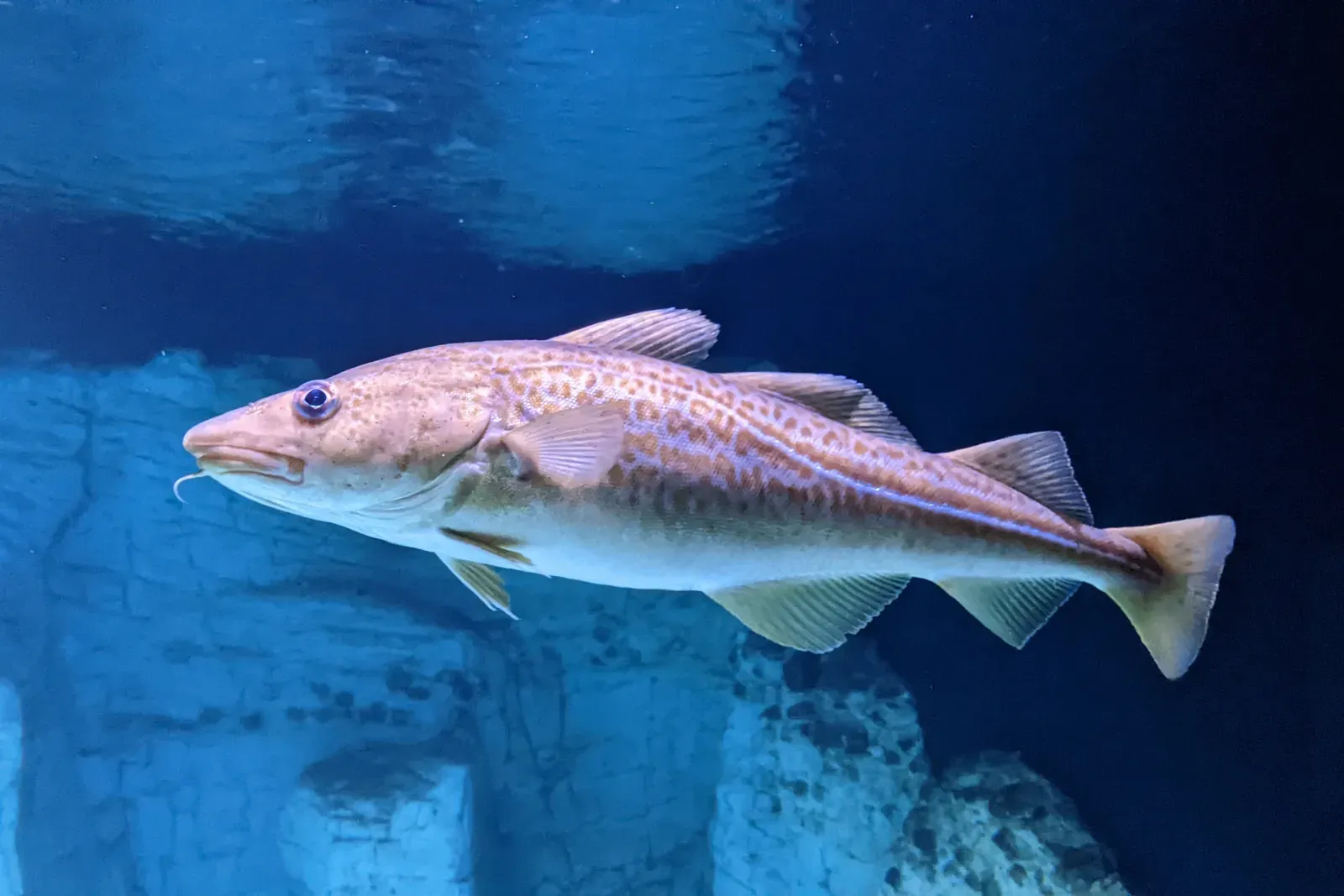
An Atlantic cod can grow longer than many bicycles, yet one of its cleverest features is a small, whisker-like barbel beneath its chin. Follow this cold-water explorer from rocky shelter to open sea—and discover why its home needs care.
A whisker wiggles over the seafloor
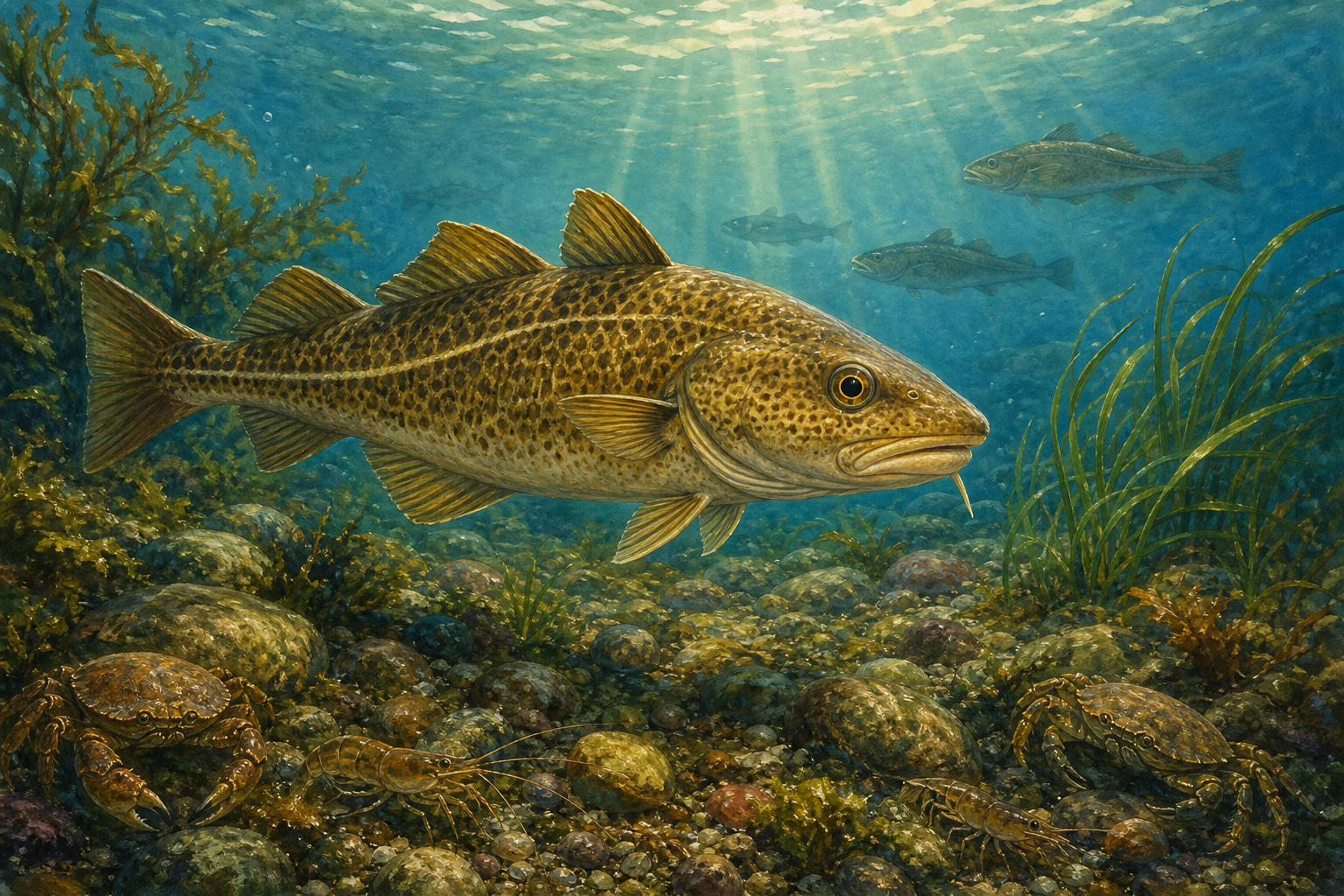
Picture a cold, blue-green Atlantic sea. Light slips down through the water in wobbly ribbons. Near the seabed, an Atlantic cod glides past gravel, stones, and waving eelgrass. It is a big fish—often about 1 to 1.4 metres long, longer than many bicycles—but its most surprising detective tool is tiny.
Under its chin hangs a single whisker-like barbel. This is not a moustache for looking fancy at a fish party. The barbel helps the cod taste and feel for food near the bottom, including where the water is dim and the seafloor is muddy. Imagine having one extra fingertip under your chin to help investigate a hidden snack.
Atlantic cod are also called cod or codling, and their scientific name is Gadus morhua. They belong to the cod family, Gadidae. A name is only a label, though. The exciting part is meeting the animal behind it: a strong swimmer built for a world of chilly currents and seabed mysteries.
Evidence: IUCN Red List of Threatened Species: Gadus morhua (Atlantic Cod) — Red List Assessment; Animal Diversity Web, University of Michigan Museum of Zoology: Gadus morhua (Cod); Wikipedia: Atlantic cod
Where does this chilly traveller roam?
Atlantic cod live in the North Atlantic and nearby Arctic waters. Their range stretches between North America and Greenland, across to Iceland, the North Sea, the Barents Sea, and the Baltic region. That is a huge watery neighbourhood, not one identical place. Different groups of cod, called stocks, can face very different conditions in different parts of the ocean.
A cod does not have to choose between being a bottom fish and an open-water fish. It can move near the seafloor and through the water above it. Cod live around coasts and continental shelves—the broad, shallower underwater edges of continents. They can be found from near shore down to roughly 500–600 metres in some places.
Young cod especially benefit from nooks and crannies: gravel, cobbles, eelgrass, and rocky shelter can offer useful hiding places. Think of these places as a busy underwater town with doorways, alleyways, and places to duck behind. A bare, damaged seabed is much less welcoming than one with plenty of structure.
Evidence: Animal Diversity Web, University of Michigan Museum of Zoology: Gadus morhua (Cod); Wikipedia: Atlantic cod; NOAA Fisheries: Atlantic Cod
What is on a cod’s dinner menu?
Atlantic cod are carnivores. As they grow, their meals change. Young cod begin with small invertebrates—animals without backbones. Bigger cod hunt fish such as herring, capelin, and sand eels. They also eat squid, crabs, and shrimp. The exact menu can vary with the season, place, and size of the cod.
That chin barbel is especially helpful when searching along the bottom for creatures such as crabs or shrimp. Then, when a fishy opportunity swims by, a cod can hunt in the water above the seabed too. It is less like a fussy restaurant customer and more like an alert explorer checking several parts of its neighbourhood.
Cod are often more active by day and make seasonal movements connected with feeding and spawning. They may gather in schools and in seasonal spawning groups. Still, a gathering is not necessarily a permanent friend group; the available evidence does not show that cod keep stable, long-term social bonds. In the sea, travelling together can be useful without being exactly like having a school best friend.
Evidence: Animal Diversity Web, University of Michigan Museum of Zoology: Gadus morhua (Cod); Wikipedia: Atlantic cod; NOAA Fisheries: Atlantic Cod
A big fish in a busy ocean web
A cod can live for about 25 years. Typical adults are around 1 to 1.4 metres long, while exceptional individuals have been recorded at more than 1.8 metres. The biggest recorded mass is near 96 kilograms—about as heavy as a large adult human. Not every cod reaches such giant proportions, of course. The ocean has room for cod of many sizes and ages.
As a predator, cod eat fish and invertebrates. When they are young, they can also become food for larger fish, seabirds, and marine mammals. This means cod are part of an ocean food web: many connected feeding relationships, rather like a giant living game of pass-the-parcel, except nobody is passing parcels and everyone is trying to make it through dinner.
That web is one reason a cod is worth noticing as more than a familiar name on a menu. Each swimming fish has its own job in the sea’s neighbourhood. When habitats are healthy and animal populations have space to recover, the web has more chances to keep working.
Evidence: Animal Diversity Web, University of Michigan Museum of Zoology: Gadus morhua (Cod); Wikipedia: Atlantic cod; NOAA Fisheries: Atlantic Cod
Why does this detective need our help?
Atlantic cod are listed globally as Vulnerable on the registered IUCN assessment. The assessment is older and needs a modern reassessment, and conditions are not the same for every stock. Some regional stocks have been severely depleted, while others are in healthier condition. So the fairest way to tell the story is this: cod need careful, place-by-place protection across their enormous range.
Heavy fishing pressure has harmed cod populations, and some activities or fishing gear can damage the structured seabed habitat that young fish use. Environmental changes affecting cold-water habitat and the success of young cod can add more difficulty. Low oxygen in water is another concern recorded for the species. It is a lot for one whiskered swimmer to cope with.
There is hopeful work, too. In United States waters, measures such as catch limits, minimum sizes, closures around spawning times or habitats, and gear restrictions are among tools used to reduce harm and help stocks rebuild. These are regional examples, not a magic fix for every part of the Atlantic. But they show an important idea: people can make rules that give ocean animals more room to live.
Evidence: IUCN Red List of Threatened Species: Gadus morhua (Atlantic Cod) — Red List Assessment; Wikipedia: Atlantic cod; NOAA Fisheries: Atlantic Cod
The next adventure can start at your plate
Caring about a cod does not mean you have to carry a clipboard to the beach or become an ocean scientist by Tuesday. You can start by noticing that a fish is a wild animal with a life: a traveller, hunter, shelter-seeker, and tiny-whisker detective. Wonder is often the first step toward kindness.
One gentle choice is to explore delicious plant-forward meals with your family: perhaps beans in a taco, lentils in a soup, chickpeas in a wrap, or seeds sprinkled over a salad. The World Health Organization describes healthy dietary patterns as including foods such as vegetables, fruit, whole grains, pulses, nuts, and seeds. Food needs differ from person to person, so children should make any bigger changes with a trusted adult and a qualified health professional.
Choosing more plant-based foods can be a caring choice for animals and for the planet. The IPCC reports that shifts toward sustainable, healthy, more plant-based diets can lower food-system emissions and reduce pressure on land and biodiversity. It is not about being perfect. It is about practising curiosity: What tasty new meal could help leave a little more space for ocean neighbours such as cod?
Evidence: World Health Organization: Healthy diet; Intergovernmental Panel on Climate Change: Climate Change 2022: Mitigation of Climate Change — Chapter 7; NOAA Fisheries: Atlantic Cod
A kind thought to carry from the shore
The next time you see a picture of a cod, picture that small chin barbel sweeping over stones as the fish searches its cold-water home. It is a reminder that ocean animals are not just ingredients or objects: they are fellow travellers with senses, challenges, and places to be.
Trying a plant-based meal now and then is one cheerful way to put that thought into action. A colourful bowl of grains, vegetables, beans, fruit, nuts, or seeds can be part of a healthy varied diet, and more plant-based dietary patterns can also reduce pressure from food systems on climate, land, and biodiversity. Ask a trusted grown-up to explore new foods with you—perhaps the first experiment is a very serious taste test involving hummus.
Evidence: World Health Organization: Healthy diet; Intergovernmental Panel on Climate Change: Climate Change 2022: Mitigation of Climate Change — Chapter 7
Questions people ask
Is an Atlantic cod really longer than a bicycle?
Often, yes. Typical Atlantic cod are about 1 to 1.4 metres long, which is longer than many bicycles. Exceptional individuals have been recorded at more than 1.8 metres, but those are not typical.
Evidence: Animal Diversity Web, University of Michigan Museum of Zoology: Gadus morhua (Cod); Wikipedia: Atlantic cod
What is the little whisker on a cod’s chin for?
It is called a barbel. It helps the cod taste and feel for food near the seabed, especially when food is hard to spot.
Evidence: Animal Diversity Web, University of Michigan Museum of Zoology: Gadus morhua (Cod); Wikipedia: Atlantic cod
Do all Atlantic cod populations have the same future?
No. Cod stocks in different regions can be in very different conditions. The global IUCN listing is Vulnerable, while local protection and recovery plans need to match each area.
Evidence: IUCN Red List of Threatened Species: Gadus morhua (Atlantic Cod) — Red List Assessment; Wikipedia: Atlantic cod; NOAA Fisheries: Atlantic Cod
How can people help cod?
Support ocean-friendly care for habitats and sensible fishing rules, and try more plant-forward foods with your family. Small caring choices can join bigger efforts to reduce pressure on wildlife and food systems.
Evidence: NOAA Fisheries: Atlantic Cod; World Health Organization: Healthy diet; Intergovernmental Panel on Climate Change: Climate Change 2022: Mitigation of Climate Change — Chapter 7
Read the evidence
Sources behind this story
- Gadus morhua (Atlantic Cod) — Red List Assessment — IUCN Red List of Threatened Species
- Gadus morhua (Cod) — Animal Diversity Web, University of Michigan Museum of Zoology
- Atlantic cod — Wikipedia
- Atlantic Cod — NOAA Fisheries
- Healthy diet — World Health Organization
- Climate Change 2022: Mitigation of Climate Change — Chapter 7 — Intergovernmental Panel on Climate Change
Health information is general education, not personal medical advice. Young readers should make food choices with a trusted adult and qualified health professional.