Today's animal friend · 14 August 2026
Moonlit Pond, Orange Teeth: Meet the American Beaver
Follow the rustle of branches to a beaver pond, where one furry family can turn a running stream into a lively watery neighbourhood.
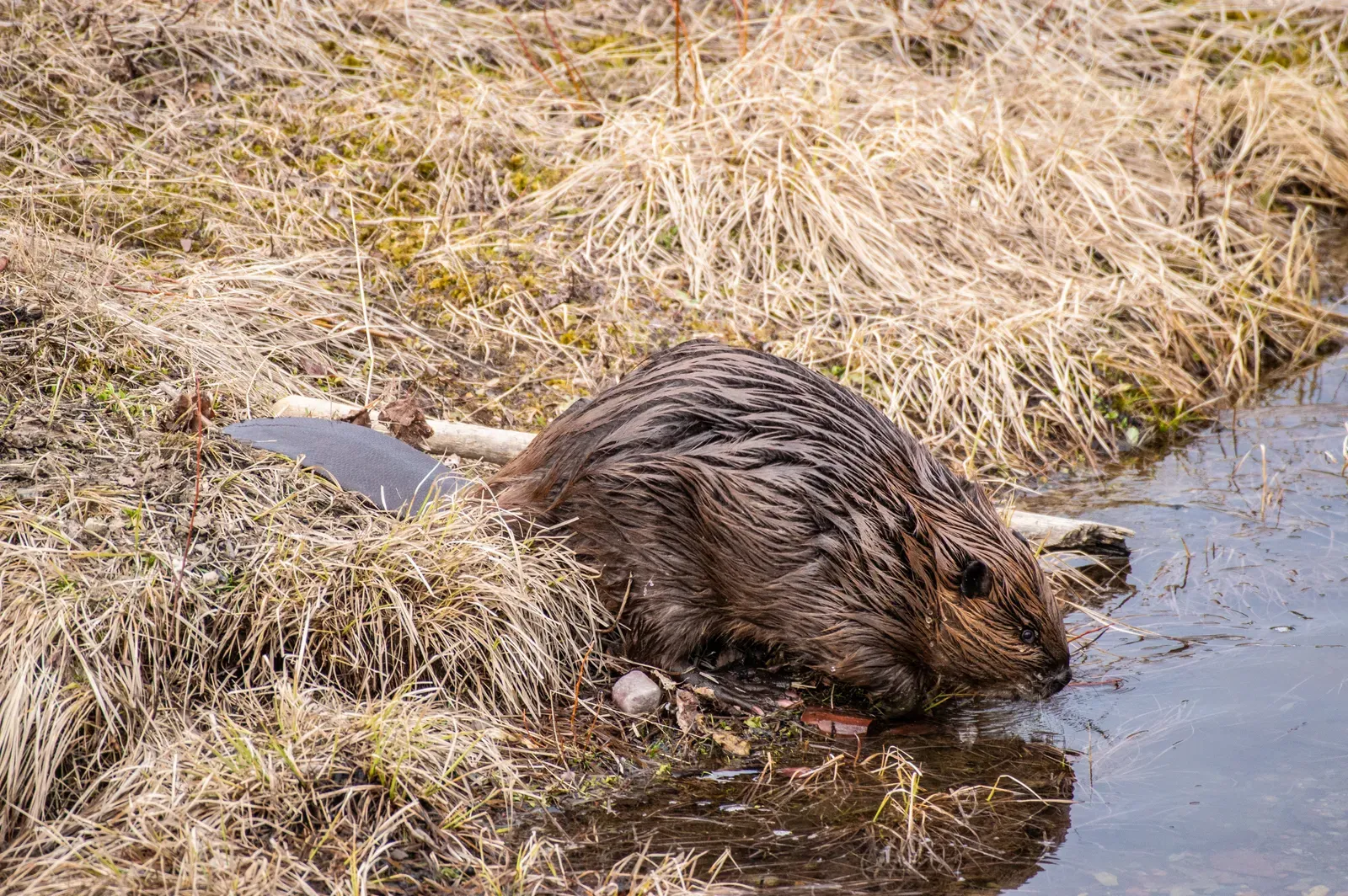
Follow the rustle of branches to a beaver pond, where one furry family can turn a running stream into a lively watery neighbourhood.
A splash, a hush, and a pond that was not here yesterday
Imagine walking beside a small stream at twilight. The air smells like wet leaves. Something rustles near the bank—scritch, scrape, plunk—and the quick-running water becomes quiet enough to reflect the sky. You may have arrived at a beaver’s construction site.
The American beaver, also called the North American or Canadian beaver, is Castor canadensis. It is North America’s largest rodent, but “rodent” does not mean tiny mouse with a lunchbox. An adult can be about as long as a child is tall when its tail is included, and it can weigh as much as a very large dog.
A beaver belongs near freshwater: rivers, streams, ponds, lakes, and wetlands. Across much of North America, it spends its evenings and nights making careful changes to the places where land and water meet. It is not simply passing through the landscape. It is helping shape it.
Evidence: IUCN Red List of Threatened Species: Castor canadensis (North American Beaver) — Red List Assessment; Animal Diversity Web, University of Michigan Museum of Zoology: Castor canadensis (American beaver); Wikipedia (English): North American beaver; U.S. Fish and Wildlife Service: The Beaver Restoration Guidebook: Working with Beaver to Restore Streams, Wetlands, and Floodplains
Why are those front teeth orange?
The first close-up surprise is a beaver’s pair of front teeth. They are bright orange, strong, and always growing. That sounds inconvenient—imagine needing to nibble a chair leg just to keep your teeth tidy! For a beaver, though, gnawing wood helps wear the teeth down as it works.
Those teeth are tools for cutting and carrying woody plants. Beavers eat plants, not other animals. In warmer times of year, their menu can include water plants, leaves, and buds. In winter, they rely more on bark, the living layer beneath bark, twigs, and stored woody stems.
So a felled tree is not just one thing to a beaver. Parts may become food, while branches can become building materials. That clever double use is one reason a beaver pond can look like a busy workshop with no hard hats required.
Evidence: Animal Diversity Web, University of Michigan Museum of Zoology: Castor canadensis (American beaver); Wikipedia (English): North American beaver; U.S. Fish and Wildlife Service: The Beaver Restoration Guidebook: Working with Beaver to Restore Streams, Wetlands, and Floodplains
How does a pile of branches become a pond?
Where water flow and the shape of the land make it useful, beavers build dams from branches, mud, and stones. The dam slows a stream and can create calmer, deeper water. Beavers do not build a big dam everywhere they live; their choices depend on the water, the land, and the plants nearby.
They may build a lodge or use a den in a bank. A lodge can have an underwater entrance, with the living space above the waterline. Deep water around a home helps a beaver move between its shelter and feeding places.
This is why beavers are often called ecosystem engineers. Their dams and channels can spread wetlands, slow water, hold sediment, and create a changing patchwork of watery and leafy habitats. A beaver is not trying to earn a badge for engineering. It is simply making a safe home—and the neighbourhood changes along with it.
Evidence: Animal Diversity Web, University of Michigan Museum of Zoology: Castor canadensis (American beaver); Wikipedia (English): North American beaver; U.S. Fish and Wildlife Service: The Beaver Restoration Guidebook: Working with Beaver to Restore Streams, Wetlands, and Floodplains
One family, many small jobs
A beaver colony is usually a family, rather than a giant crowd of strangers. It is often centred on a long-term adult pair, their newest kits, and older young beavers. Older offspring can help maintain the lodge and dam before leaving to find places of their own.
Kits arrive already fluffy, with their eyes open. They can swim within about a day. That is an astonishingly speedy start to pond life—like being ready for your first swimming lesson almost as soon as you meet the world.
Family life has practical moments: moving vegetation, caring for young kits, and repairing waterworks. A dam can need attention after changing water conditions. Looking at a beaver pond, it is tempting to see only sticks. Look again, and it becomes a home made through teamwork.
Evidence: Animal Diversity Web, University of Michigan Museum of Zoology: Castor canadensis (American beaver); U.S. Fish and Wildlife Service: The Beaver Restoration Guidebook: Working with Beaver to Restore Streams, Wetlands, and Floodplains; Wikipedia (English): North American beaver
A pond can be a whole wildlife neighbourhood
When beavers slow water and expand wet places, they can create habitat used by many other living things. Wetland edges, channels, ponds, and nearby plant-covered banks form a mosaic: not one identical space, but several kinds of places tucked together.
That does not mean every beaver project fits every location. Water near roads, farms, homes, or other important places can bring real problems from flooding, tree cutting, or burrowing. The kindest, smartest answer is not a one-size-fits-all rule. People can assess each site and use conflict-aware ways to manage risks while keeping beavers and wetland benefits where possible.
If you visit a pond, be a quiet guest. Watch from a respectful distance, leave branches and plants where they are, and let the animals decide whether to appear. At twilight, patience is almost a superpower.
Evidence: U.S. Fish and Wildlife Service: The Beaver Restoration Guidebook: Working with Beaver to Restore Streams, Wetlands, and Floodplains; IUCN Red List of Threatened Species: Castor canadensis (North American Beaver) — Red List Assessment
A comeback story—with room for care
Long ago, commercial trapping for fur greatly reduced beaver numbers in many places. Today, the American beaver is listed by the IUCN as Least Concern, with a recovering or increasing range-wide trend in the assessment generally cited as 2016. That is good news, and it is worth celebrating.
But “doing well overall” does not mean every local beaver family is safe from trouble. Wetland habitat matters, and beavers may be removed when their activities clash with roads, property, or land uses. Protecting streamside habitat and planning carefully can help people make room for both human needs and busy pond neighbours.
A wonderful thing about beavers is that caring for one family can mean caring for a whole watery place. Their story invites a big question: what happens when we notice that a wild animal’s home is also part of many other creatures’ homes? Usually, we begin to look more gently.
Evidence: IUCN Red List of Threatened Species: Castor canadensis (North American Beaver) — Red List Assessment; U.S. Fish and Wildlife Service: The Beaver Restoration Guidebook: Working with Beaver to Restore Streams, Wetlands, and Floodplains; Animal Diversity Web, University of Michigan Museum of Zoology: Castor canadensis (American beaver)
Your next beaver-sized question
You do not need to spot a beaver to become a pond detective. Notice where a stream slows. Look for muddy banks, woody vegetation near water, and the quiet boundary where reeds, water, and trees meet. Never pull apart a dam or try to feed wildlife. The best discoveries leave a place exactly as alive as you found it.
Then carry the beaver’s lesson home: small choices can help build a kinder neighbourhood. A plant-forward meal can be an invitation to notice plants as delicious food, not merely background scenery. With a trusted adult, you might try beans, lentils, vegetables, fruit, whole grains, nuts, or seeds in meals that suit your family.
Beavers show that a life can be both ordinary and extraordinary: eat leaves, fix the roof, care for family, reshape a stream. Beneath a moonlit sky, that is plenty magical.
Evidence: Animal Diversity Web, University of Michigan Museum of Zoology: Castor canadensis (American beaver); U.S. Fish and Wildlife Service: The Beaver Restoration Guidebook: Working with Beaver to Restore Streams, Wetlands, and Floodplains; World Health Organization: Healthy diet
A gentle choice for pond friends—and our shared home
It is easy to cheer for a beaver building a safe, plant-filled home. We can widen that kindness to other animals, too. Choosing more plant-based foods is one peaceful way to enjoy meals while remembering that animals are friends with lives of their own.
The World Health Organization describes healthy eating patterns as varied and rich in foods such as whole grains, vegetables, fruit, pulses, nuts, and seeds. The IPCC reports that shifts toward sustainable, healthy, more plant-based diets can reduce food-system emissions and pressure on land and biodiversity. No one has to be perfect; exploring a tasty plant-forward choice with a trusted adult can be a hopeful beginning.
Evidence: World Health Organization: Healthy diet; Intergovernmental Panel on Climate Change: Climate Change 2022: Mitigation of Climate Change — Chapter 7
Questions people ask
Are American beavers the same as Eurasian beavers?
No. The American beaver is Castor canadensis, a North American species. The Eurasian beaver is a different species, Castor fiber.
Evidence: Animal Diversity Web, University of Michigan Museum of Zoology: Castor canadensis (American beaver); IUCN Red List of Threatened Species: Castor canadensis (North American Beaver) — Red List Assessment
Do beavers eat whole trees?
Not exactly. They are herbivores that eat plant parts such as leaves, buds, water plants, bark, twigs, and the living tissue beneath bark. They also use woody material in construction.
Evidence: Animal Diversity Web, University of Michigan Museum of Zoology: Castor canadensis (American beaver); U.S. Fish and Wildlife Service: The Beaver Restoration Guidebook: Working with Beaver to Restore Streams, Wetlands, and Floodplains
Do all beavers build dams?
Beavers may build dams, but not at every site. Their building depends on local water flow, land shape, and available vegetation.
Evidence: Animal Diversity Web, University of Michigan Museum of Zoology: Castor canadensis (American beaver); U.S. Fish and Wildlife Service: The Beaver Restoration Guidebook: Working with Beaver to Restore Streams, Wetlands, and Floodplains
When is a good time to look for beaver signs?
Beavers are most active around twilight and at night. In daylight, you can still look quietly for pond habitat and signs of woody work without disturbing the animals.
Evidence: Animal Diversity Web, University of Michigan Museum of Zoology: Castor canadensis (American beaver); Wikipedia (English): North American beaver

Read the evidence
Sources behind this story
- Castor canadensis (North American Beaver) — Red List Assessment — IUCN Red List of Threatened Species
- Castor canadensis (American beaver) — Animal Diversity Web, University of Michigan Museum of Zoology
- North American beaver — Wikipedia (English)
- The Beaver Restoration Guidebook: Working with Beaver to Restore Streams, Wetlands, and Floodplains — U.S. Fish and Wildlife Service
- Healthy diet — World Health Organization
- Climate Change 2022: Mitigation of Climate Change — Chapter 7 — Intergovernmental Panel on Climate Change
Health information is general education, not personal medical advice. Young readers should make food choices with a trusted adult and qualified health professional.