Today's animal friend · 14 October 2026
The Elephant with a Hand at the End of Its Nose
African bush elephants are enormous plant-eaters with tiny finger-like trunk tips, close family groups, and a big job in the places they roam.
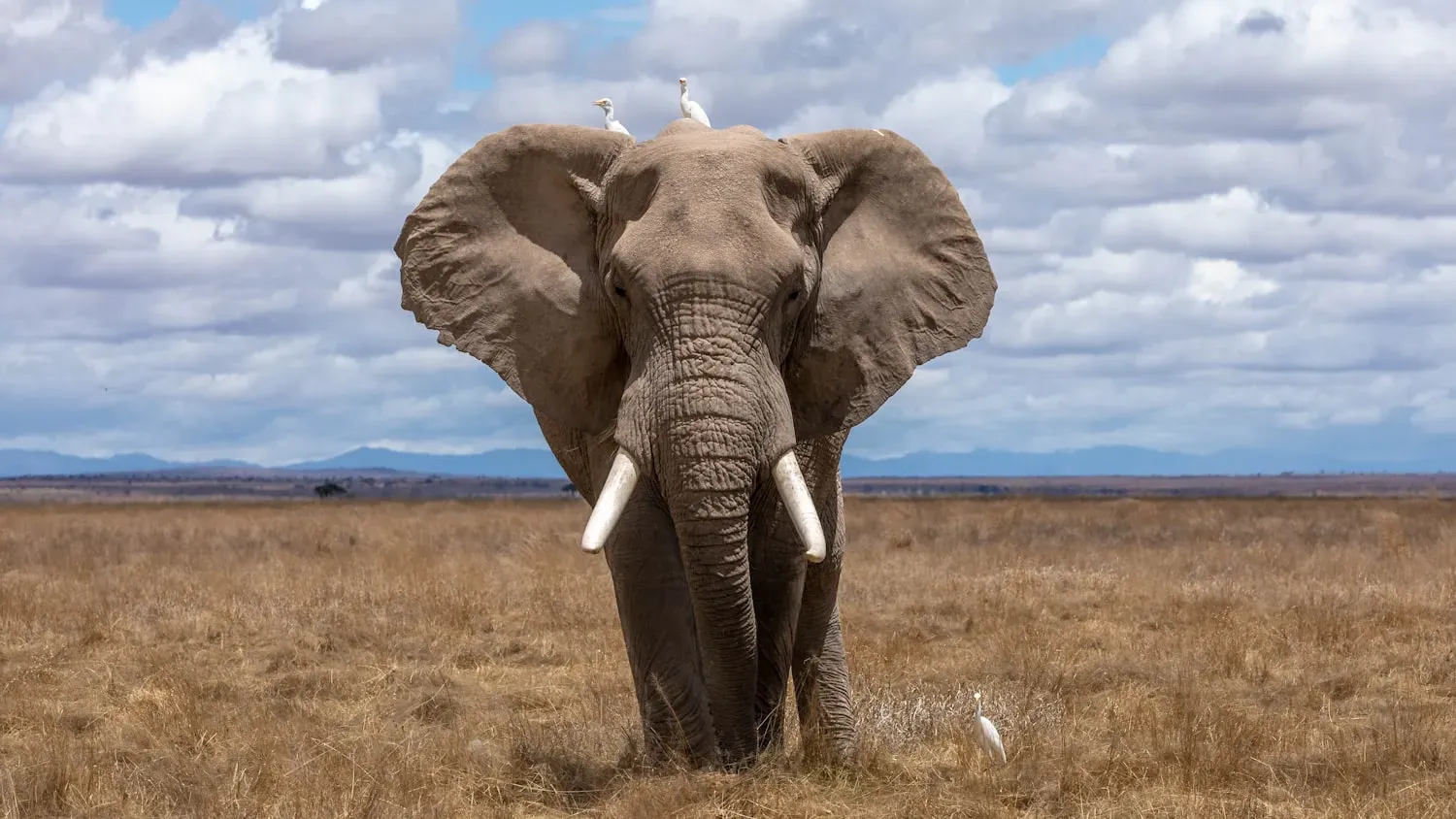
African bush elephants are enormous plant-eaters with tiny finger-like trunk tips, close family groups, and a big job in the places they roam.
A leaf, a trunk, and a very large surprise
Imagine standing quietly near a patch of African grassland. The air feels warm. Grass whispers in the breeze. Then a grey shape steps from the trees, and the ground seems to give a small, deep hello beneath your feet.
It is an African bush elephant, also called an African savanna elephant: the biggest animal that walks on land anywhere in the world. An especially large adult male can stand close to four metres at the shoulder and weigh around seven tonnes. That is a truly spectacular amount of elephant.
But here is the surprising part. At the end of that mighty trunk are two little finger-like tips. They can help the elephant handle something huge, such as a branch, or choose one small leaf. A creature as large as a lorry-sized lump of muscle can still be careful with a leaf. Now that is excellent trunk control.
The trunk is a long nose, but calling it “just a nose” is like calling a backpack “just a bag.” An elephant uses it for smelling, breathing, drinking, feeding, and communicating. It is one busy piece of equipment.
Evidence: IUCN Red List of Threatened Species: Loxodonta africana (African Bush Elephant) — Red List Assessment; Wikipedia: African bush elephant; Animal Diversity Web, University of Michigan Museum of Zoology: Loxodonta africana (African bush elephant); World Wildlife Fund (WWF): African elephants: Giants of the savanna and forest
Where can this giant wander?
African bush elephants, whose scientific name is Loxodonta africana, live in fragmented populations across sub-Saharan Africa. They do not occupy the whole continent in one unbroken elephant blanket. Instead, different groups need room within a changing patchwork of wild places.
They can use savannas, grasslands, woodlands, forests, and wetlands, as long as food and water are available. Picture an explorer whose route might pass through open grass, under shady trees, and towards a muddy water spot. The best route can change with season, heat, food, and disturbance.
Elephants travel between forage and water. Some may be active in daylight, while others can be active at night, especially when heat or disturbance makes that useful. So there is no single, exact “elephant timetable.” They are flexible travellers, not clock-watchers.
As they feed and move, these great herbivores can carry seeds and reshape plants and pathways. That can affect the habitat other animals use too. An elephant is not only passing through its home; its everyday journey can help shape it.
Evidence: IUCN Red List of Threatened Species: Loxodonta africana (African Bush Elephant) — Red List Assessment; Wikipedia: African bush elephant; Animal Diversity Web, University of Michigan Museum of Zoology: Loxodonta africana (African bush elephant); World Wildlife Fund (WWF): African elephants: Giants of the savanna and forest
What is on an elephant’s enormous menu?
No sandwiches, no soup, no tiny restaurant menus tucked under a napkin. African bush elephants are herbivores, meaning they eat plants. Their choices can include grasses, leaves, twigs, bark, roots, herbs, and fruit. What they choose changes with the place and the season.
A grown elephant may eat about 150 kilograms of plants in a day. That is more than the weight of two grown people, all made of crunchy, leafy, barky, fruity meals. Finding enough food is serious work, so feeding and travelling can take up many hours.
A trunk makes this menu possible. It can gather grass, reach leaves, pull at a branch, and bring food to the mouth. Big ears are useful too: elephants can flap them to help cool themselves on hot days.
Eating is not only about filling an elephant tummy. Seeds can travel with elephants and be dropped in new places. Feeding may also open routes through vegetation. The results differ from place to place, but it is fair to say that a hungry elephant can be a powerful neighbour in its ecosystem.
Evidence: Wikipedia: African bush elephant; Animal Diversity Web, University of Michigan Museum of Zoology: Loxodonta africana (African bush elephant); World Wildlife Fund (WWF): African elephants: Giants of the savanna and forest
Meet the family’s map-reader
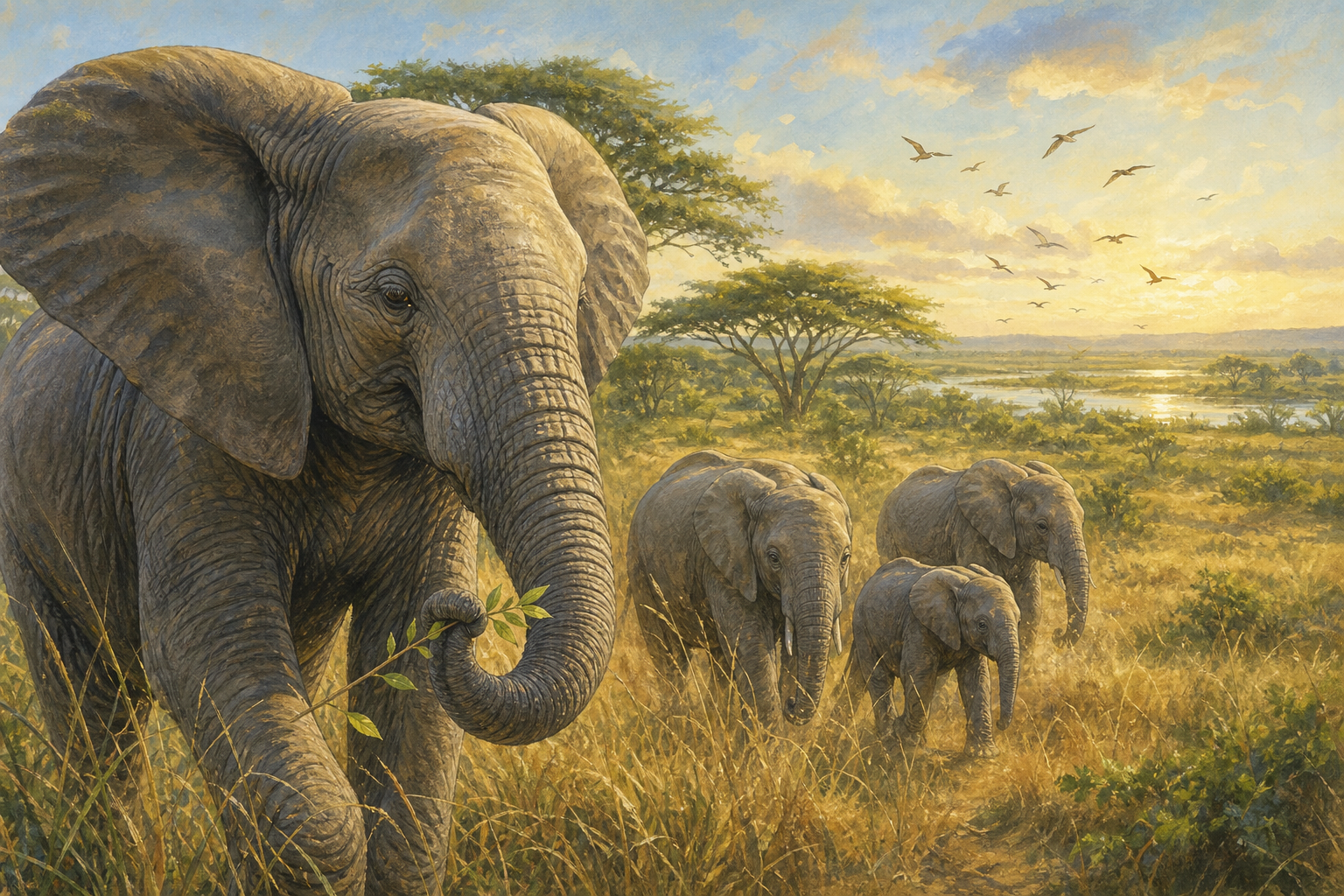
Now picture a small group moving together: mothers, aunts, young elephants, and an experienced older female. In many elephant families, related females and their young form lasting groups led by a matriarch.
“Matriarch” means a female leader. Her experience can help the family find food and water, especially when conditions are hard. That does not mean she carries a paper map in her trunk—although that would be rather handy. It means her long life and experience matter to the group.
Mature males usually travel separately or spend time in looser groups of males. Elephant groups can change in size and company depending on the habitat and risks around them. Still, the family bonds among related females and young are a wonderful reminder that knowledge can be shared by staying close and looking after one another.
African bush elephants may live for around 60 to 70 years. That gives an experienced elephant many seasons in which to learn the routes, smells, water places, and food patches of home.
Evidence: Wikipedia: African bush elephant; Animal Diversity Web, University of Michigan Museum of Zoology: Loxodonta africana (African bush elephant)
Why does room to roam matter so much?
The African bush elephant is listed as Endangered on the IUCN Red List, with a decreasing population trend in the 2021 assessment. That word—Endangered—means this remarkable animal faces a high risk of disappearing in the wild if threats are not tackled.
One threat is poaching for ivory, the hard material in elephant tusks. Another is habitat loss, when the places elephants need are changed or lost. Habitat can also become split into smaller pieces. Imagine trying to visit friends when roads between every neighbourhood kept vanishing: it becomes harder to travel safely to water, food, and family places.
Elephants and people can also come into conflict where elephant movements overlap farms and settlements. This is a challenge for communities as well as elephants, and it needs thoughtful solutions rather than blaming either side.
There is hope in determined work. Conservation plans include protecting connected habitat and movement corridors, monitoring elephant populations, reducing poaching and illegal ivory trade, and supporting community-led ways to reduce conflict. These are ongoing efforts, not a magic wand—but caring people working together can make routes safer for elephants and safer for people too.
Evidence: IUCN Red List of Threatened Species: Loxodonta africana (African Bush Elephant) — Red List Assessment; World Wildlife Fund (WWF): African elephants: Giants of the savanna and forest; Convention on the Conservation of Migratory Species of Wild Animals: Endorsement of the African Elephant Action Plan
A small kindness with a very big echo
You may not live anywhere near an elephant trail, but you can still practise noticing who shares our planet. When you see a plant, ask: who might eat this? When you hear about a wild place, ask: can animals move through it? Curious questions are the first footprints of caring.
At home, a plant-forward meal can be a cheerful adventure: perhaps beans, lentils, vegetables, fruit, whole grains, nuts, or seeds with your family’s usual favourites. The World Health Organization includes these foods in guidance on healthy diets, and the IPCC reports that shifts toward sustainable, healthy, more plant-based diets can lower food-system emissions and reduce pressure on land and biodiversity.
This is not about being perfect, winning a dinner-table argument, or telling someone else what to eat. It is about choosing kindness where we can, with help from a trusted adult and, for personal food questions, a qualified health professional. An elephant’s menu is all plants; perhaps it can inspire us to give colourful plant foods an interested nibble too.
Then keep the picture in your mind: a huge grey traveller, softly picking up one leaf with the tips of its trunk. Wonderful animals need space, safety, and people who remember that their lives matter.
Evidence: World Health Organization: Healthy diet; Intergovernmental Panel on Climate Change: Climate Change 2022: Mitigation of Climate Change — Chapter 7; World Wildlife Fund (WWF): African elephants: Giants of the savanna and forest; Wikipedia: African bush elephant
Kind choices can begin with curiosity
Elephants are not here for our use; they are fellow travellers with families, memories, and homes of their own. We can honour that by learning about the challenges they face and cheering for protection that works with local communities.
A colourful, plant-forward plate is also a gentle place to practise care. WHO guidance highlights whole grains, vegetables, fruit, pulses, nuts, and seeds as parts of healthy diets, while the IPCC finds that more plant-based, sustainable dietary shifts can reduce food-system emissions and pressure on land and biodiversity.
Try new foods with your family, without guilt or rules that do not fit your needs. Kindness is not a contest. It can be one curious bite, one caring conversation, and one promise to let wild animals have the room to be wonderfully themselves.
Evidence: World Health Organization: Healthy diet; Intergovernmental Panel on Climate Change: Climate Change 2022: Mitigation of Climate Change — Chapter 7
Questions people ask
Is an African bush elephant the same as an African forest elephant?
No. The African bush, or savanna, elephant is Loxodonta africana. It is distinct from the African forest elephant, Loxodonta cyclotis.
Evidence: Animal Diversity Web, University of Michigan Museum of Zoology: Loxodonta africana (African bush elephant); Wikipedia: African bush elephant
Do elephants eat meat?
African bush elephants are herbivores. Their foods include grasses, leaves, twigs, bark, roots, herbs, and fruit.
Evidence: Wikipedia: African bush elephant; World Wildlife Fund (WWF): African elephants: Giants of the savanna and forest
Why are elephant corridors helpful?
Corridors can help keep habitat connected, giving elephants safer ways to move between areas they use for food, water, and family travel.
Evidence: Convention on the Conservation of Migratory Species of Wild Animals: Endorsement of the African Elephant Action Plan; IUCN Red List of Threatened Species: Loxodonta africana (African Bush Elephant) — Red List Assessment; World Wildlife Fund (WWF): African elephants: Giants of the savanna and forest
Who leads an elephant family?
A lasting family group of related females and young is often led by an experienced female called a matriarch.
Evidence: Animal Diversity Web, University of Michigan Museum of Zoology: Loxodonta africana (African bush elephant); Wikipedia: African bush elephant
Read the evidence
Sources behind this story
- Loxodonta africana (African Bush Elephant) — Red List Assessment — IUCN Red List of Threatened Species
- African bush elephant — Wikipedia
- Loxodonta africana (African bush elephant) — Animal Diversity Web, University of Michigan Museum of Zoology
- African elephants: Giants of the savanna and forest — World Wildlife Fund (WWF)
- Endorsement of the African Elephant Action Plan — Convention on the Conservation of Migratory Species of Wild Animals
- Healthy diet — World Health Organization
- Climate Change 2022: Mitigation of Climate Change — Chapter 7 — Intergovernmental Panel on Climate Change
Health information is general education, not personal medical advice. Young readers should make food choices with a trusted adult and qualified health professional.