 ← All animals
 arachnid · Araneus diadematus
European garden spider
Gallery
2 photos Real photograph 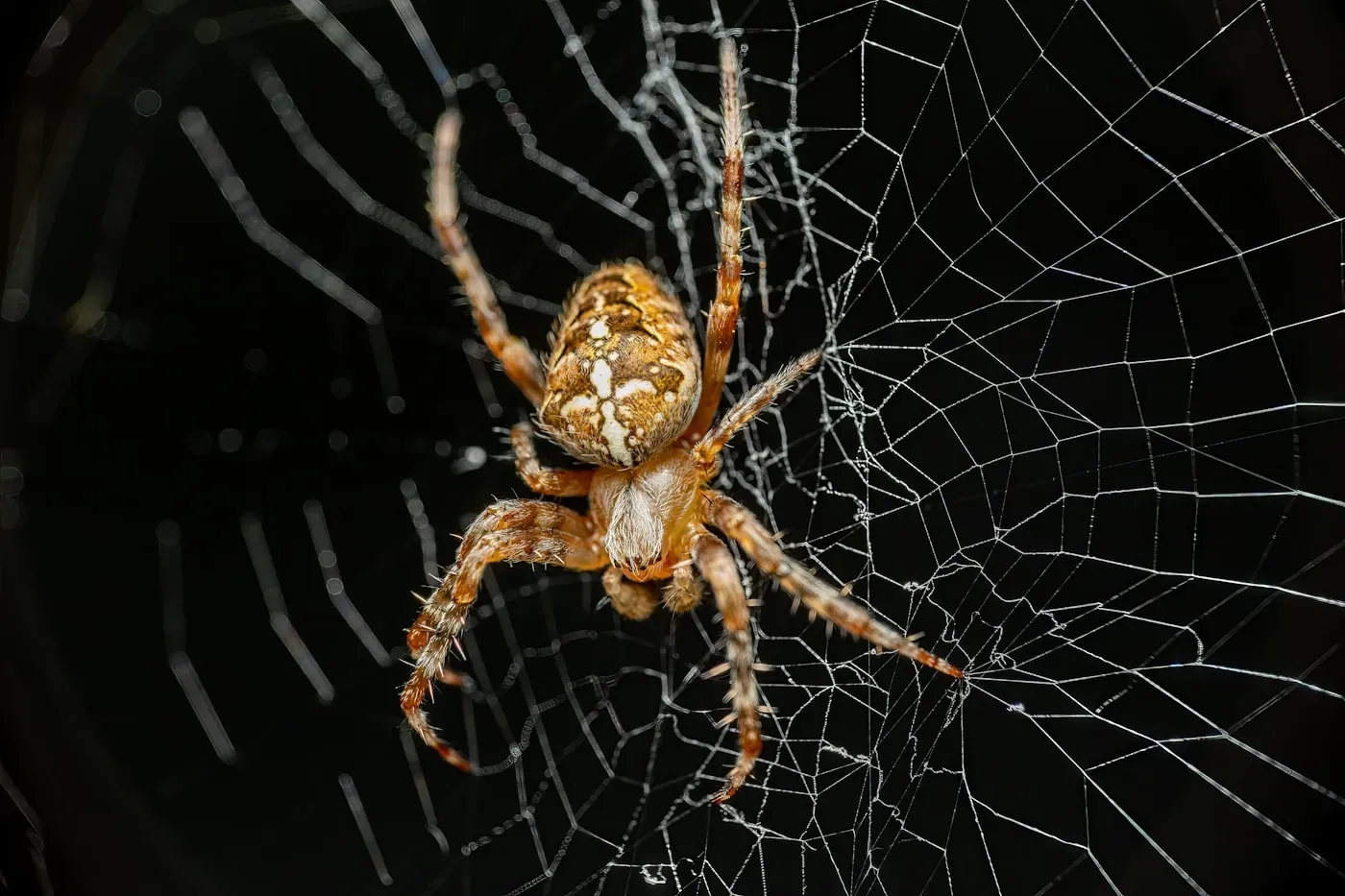 Real photograph
 Why we love them
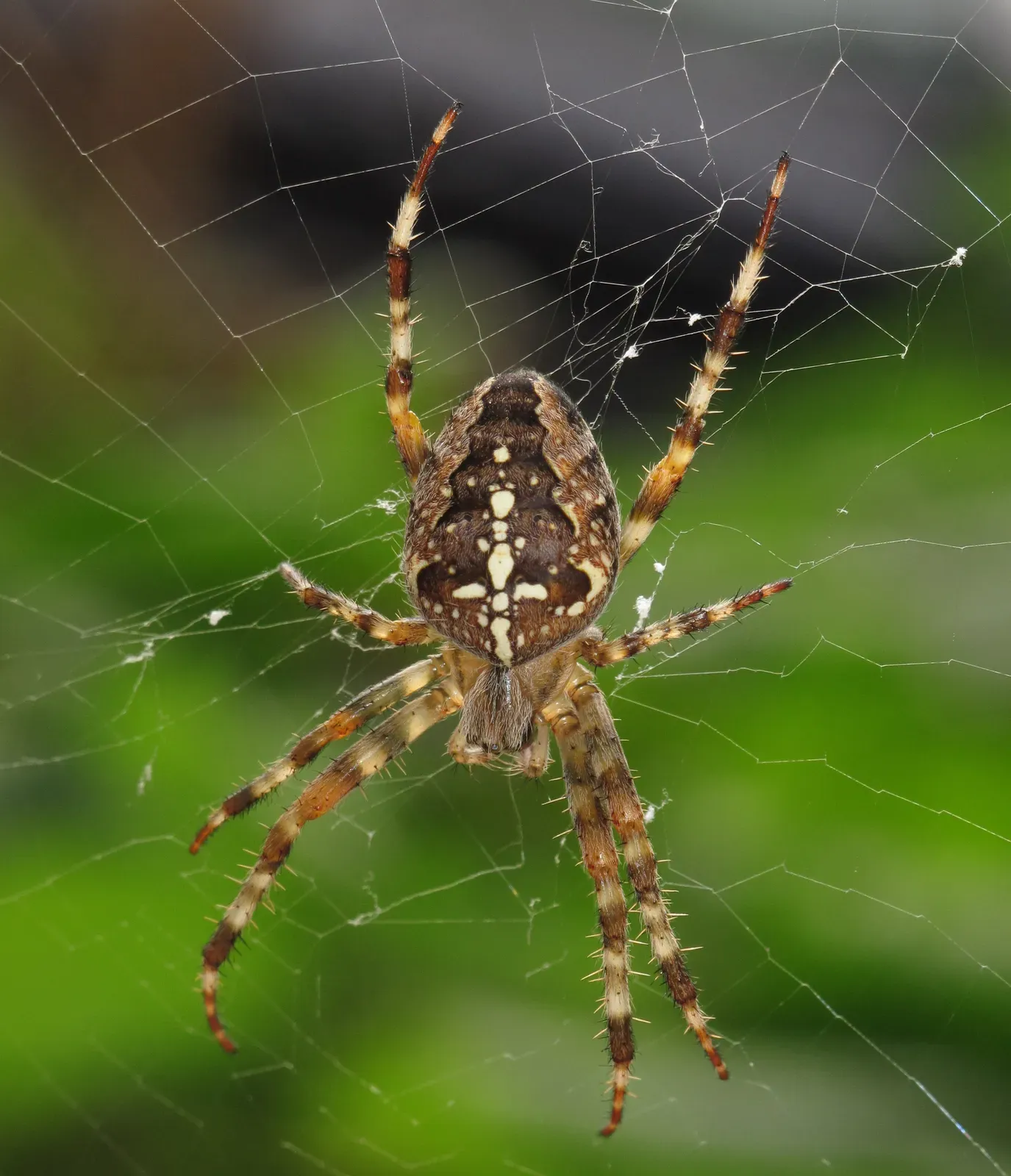
The European garden spider is a gentle, clever web-builder you might spot between two plants on a misty morning. It has a round body with a pretty pale cross made of little white spots on its back. That cross is how it earned another of its names, the cross orbweaver.
This spider is a true artist. Using silk it makes inside its own body, it spins a beautiful round web shaped like a wheel, with spokes reaching out to a spiral of sticky threads. Building a whole web can take less than an hour, and the spider often does it again and again as the days go by.
The web is the spider's clever way of catching food without chasing it. When a fly or a moth bumps into the sticky threads, the spider feels the web tremble and hurries over for its meal. When the web grows old and tatty, the tidy spider rolls it up, eats the silk to use again, and spins a brand-new one.
Garden spiders are shy and completely harmless to people. If something big comes near, the spider would much rather hide or drop down on a silk line than come close. In autumn a mother spider wraps her eggs in a soft, golden silk blanket to keep them safe through the cold.
These small spiders are part of garden food webs. They catch flying insects, and their dewy webs are one of the loveliest sights of a cool morning.
My home
Garden, woodland, hedgerow, grassland
Where I live
Europe, North America
What I eat
Flies, moths, small beetles
How long I am
0.005–0.02 m
How long I live
0.5–1.5 years
This spider spins a round web shaped like a wheel to catch flying insects.
It has a pale cross made of little spots on its back, which gives it its name.
When its web gets worn out, the spider rolls it up, eats the old silk, and spins a fresh one.
Every european garden spider can feel happy, scared and loved — just like you.
Looking after my friends
How many are there?
A female European garden spider lays about 300–800 eggs in one protected egg sac.
This is one egg sac, not a population estimate.
Estimate source: Young Garden Spiders
How are they doing?
No global assessmentThis animal does not have a global extinction-risk assessment recorded in this system.
You can help by learning their names, keeping wild places clean, and telling someone why this animal matters.
Where this came from
- Garden spiders: the UK's orb weavers — Natural History Museum — Natural History Museum, London
- Finding love on the web — Natural History Museum, London
- Araneus diadematus — Animal Diversity Web — University of Michigan Museum of Zoology
- Garden spider — The Wildlife Trusts — The Wildlife Trusts
- Young Garden Spiders — British Arachnological Society